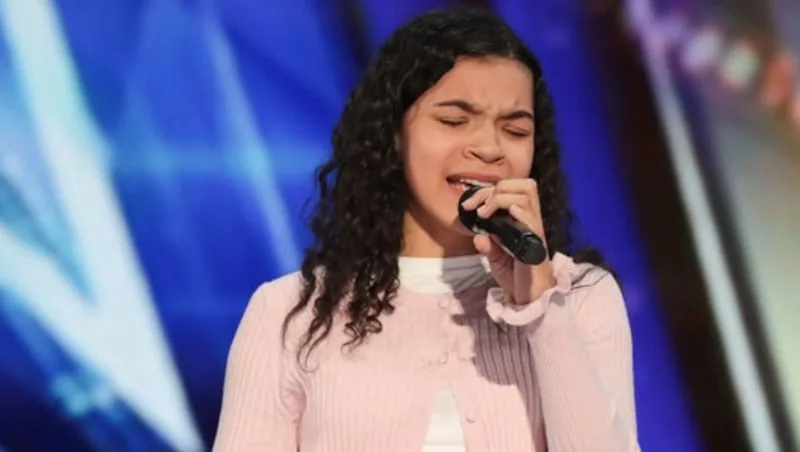
For her performance, Sophie chose the Frank Sinatra classic “My Way,” a song typically associated with a lifetime of experience and reflection. Hearing such a sophisticated and complex song performed by a five-year-old was both hilarious and deeply impressive to everyone in the arena. Sophie sang with surprising control and a sweet, melodic tone, effectively making the legendary anthem her own. By the time she finished, the judges were visibly delighted, having been thoroughly entertained by her unique and mature musical choice.
Sophie Fatu, a charming five-year-old from Charleston, West Virginia, made a huge impression on the America’s Got Talent stage. From the moment she walked out, she captivated the audience and the judges with her incredible confidence and personality. During her interview, she shared that traveling by airplane to the show was a major highlight for her and adorably admitted that Simon Cowell was her favorite judge. Her fearless attitude was a stark contrast to the many adult contestants who often struggle with nerves on such a massive platform.
The panel was unanimous in their praise for Sophie’s bravery and talent. Simon Cowell remarked that she was “happiness in a bottle,” while the other judges noted how rare it was to see such a young child perform with such poise and joy. Even Simon’s young son, Eric, was asked for his opinion, adding to the wholesome atmosphere of the audition. With three enthusiastic “yes” votes, Sophie Fatu proved that age is just a number when it comes to having star quality, leaving the stage as one of the most adorable contestants in the show’s history.
Talent shows are full of surprises, but this audition delivered one of the biggest twists of the season! Two teenage brothers walked onto the stage looking calm and humble, giving no hint that they had a connection to one of the world’s biggest music stars. What happened next left the judges—and the audience—completely speechless.
\
As the brothers introduced themselves, they shared their passion for writing and performing music. They explained that they had prepared an original song, hoping to show everyone who they were as artists. At first, nothing seemed out of the ordinary… until the judges started asking more about their family.
That’s when the shocking revelation came. The brothers casually mentioned that their famous uncle was Bruno Mars! The audience gasped, and the judges couldn’t believe what they had just heard. Instead of relying on that famous connection, however, the teens made it clear they wanted to earn recognition through their own talent and hard work.
With the spotlight on them, the brothers picked up their instruments and began performing their original song. From the very first note, it was obvious they weren’t depending on a famous last name. Their harmonies blended beautifully, the lyrics were heartfelt, and the melody was instantly memorable.
The audience quickly became captivated. As the song built, cheers and applause echoed throughout the theater. The brothers performed with confidence, authenticity, and a chemistry that only siblings can share. Their passion shined through every lyric, making the performance feel both personal and inspiring.
The judges watched with huge smiles, clearly impressed by the duo’s songwriting and stage presence. They praised the brothers for stepping out of their famous relative’s shadow and proving they had their own unique voices. Rather than trying to imitate anyone else, they showcased a style that felt fresh and genuine.
When the final note faded, the entire audience jumped to its feet for a thunderous standing ovation. The judges applauded their originality, musicianship, and courage to perform their own song on such a massive stage.
After the audition aired, social media exploded with excitement. Fans couldn’t stop talking about the surprise family connection and, even more importantly, the brothers’ incredible performance.
Comments poured in from viewers around the world:
“I can’t believe they kept that secret!” “Their original song is amazing!” “Talent clearly runs in the family—but they earned this on their own!”
This unforgettable audition proved that while famous connections may spark curiosity, true success comes from passion, creativity, and dedication. The teenage brothers didn’t just surprise the judges—they won them over with an original song that showcased their own identity as artists.
Sometimes the greatest reveal isn’t who you’re related to… it’s the incredible talent you bring to the stage.
>>>Little-known mistakes and bloopers in Dukes of Hazzard Please
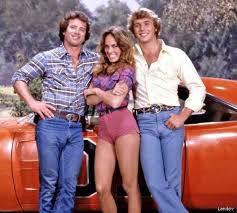
The Dukes of Hazzard was a hugely popular 1980s TV series known for its action-packed car chases, the iconic General Lee, and a memorable cast that created lasting nostalgia for viewers for generations of television audiences around the world.
It became a family-friendly favorite, with minimal swearing and straightforward storytelling that made it easy for audiences to enjoy. Many fans tuned in regularly, especially during its Friday night broadcasts creating a strong weekly viewing tradition for many.
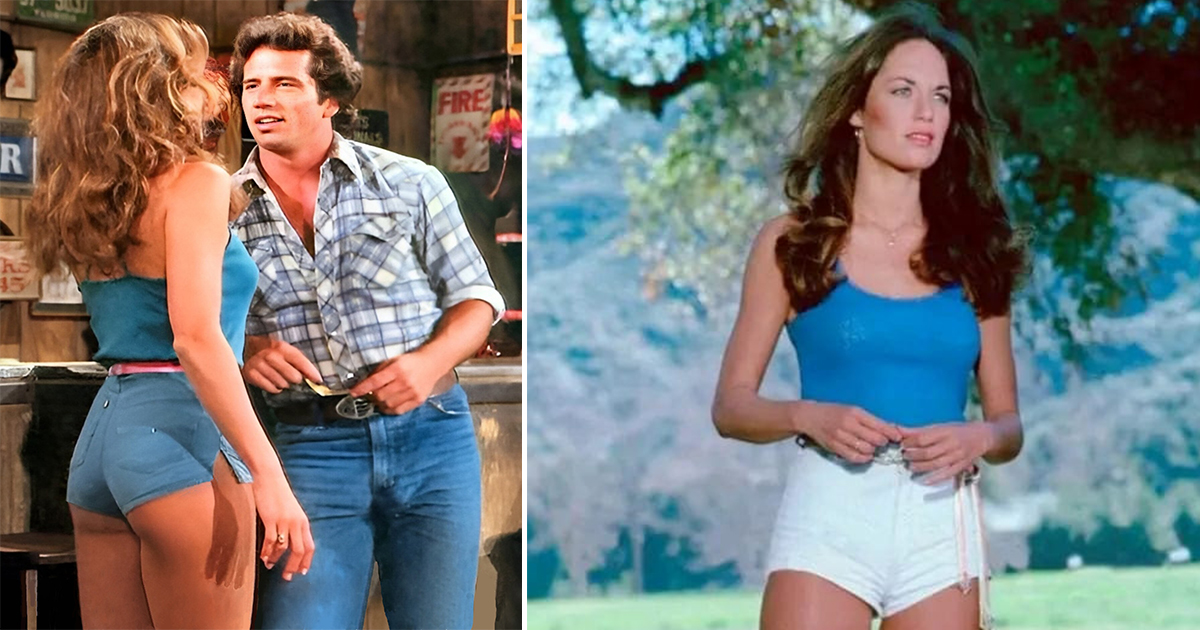
Daisy Duke became a cultural icon thanks to her distinctive style, especially her short shorts, which influenced 1980s fashion and left a lasting impression on pop culture and television audiences helping define 1980s pop culture style trends overall.
Behind its fun exterior, fans have also spotted numerous bloopers, mistakes, and small continuity errors over the years. These hidden details continue to entertain viewers who revisit the classic series today which fans still enjoy discovering on rewatches today.
Sorrell Booke’s portrayal of Boss Hogg included a unique contract clause ensuring the character would never be involved in drug dealing or murder, keeping the tone light and suitable for families reflecting the show’s consistent family-oriented production standards overall.
Despite his villain role, Booke’s performance added humor and charm, making Boss Hogg one of television’s most memorable antagonists, even earning praise that some felt deserved award recognition strengthening character’s comedic impact across series run further.
Talk of a potential revival has surfaced over the years, with cast members occasionally expressing interest. However, nothing has been confirmed, leaving the possibility of a reunion uncertain but intriguing keeping fan interest alive still.
Overall, The Dukes of Hazzard remains a nostalgic symbol of 1980s television, remembered for its humor, action, and unforgettable characters that continue to resonate with longtime fans today maintaining its place in classic TV history today.
>>>Little-known mistakes and bloopers in Dukes of Hazzard Please
The Dukes of Hazzard was a hugely popular 1980s TV series known for its action-packed car chases, the iconic General Lee, and a memorable cast that created lasting nostalgia for viewers for generations of television audiences around the world.
It became a family-friendly favorite, with minimal swearing and straightforward storytelling that made it easy for audiences to enjoy. Many fans tuned in regularly, especially during its Friday night broadcasts creating a strong weekly viewing tradition for many.
Daisy Duke became a cultural icon thanks to her distinctive style, especially her short shorts, which influenced 1980s fashion and left a lasting impression on pop culture and television audiences helping define 1980s pop culture style trends overall.
Behind its fun exterior, fans have also spotted numerous bloopers, mistakes, and small continuity errors over the years. These hidden details continue to entertain viewers who revisit the classic series today which fans still enjoy discovering on rewatches today.
Sorrell Booke’s portrayal of Boss Hogg included a unique contract clause ensuring the character would never be involved in drug dealing or murder, keeping the tone light and suitable for families reflecting the show’s consistent family-oriented production standards overall.
Despite his villain role, Booke’s performance added humor and charm, making Boss Hogg one of television’s most memorable antagonists, even earning praise that some felt deserved award recognition strengthening character’s comedic impact across series run further.
Talk of a potential revival has surfaced over the years, with cast members occasionally expressing interest. However, nothing has been confirmed, leaving the possibility of a reunion uncertain but intriguing keeping fan interest alive still.
Overall, The Dukes of Hazzard remains a nostalgic symbol of 1980s television, remembered for its humor, action, and unforgettable characters that continue to resonate with longtime fans today maintaining its place in classic TV history today.
>>>Little-known mistakes and bloopers in Dukes of Hazzard Please
The Dukes of Hazzard was a hugely popular 1980s TV series known for its action-packed car chases, the iconic General Lee, and a memorable cast that created lasting nostalgia for viewers for generations of television audiences around the world.
It became a family-friendly favorite, with minimal swearing and straightforward storytelling that made it easy for audiences to enjoy. Many fans tuned in regularly, especially during its Friday night broadcasts creating a strong weekly viewing tradition for many.
Daisy Duke became a cultural icon thanks to her distinctive style, especially her short shorts, which influenced 1980s fashion and left a lasting impression on pop culture and television audiences helping define 1980s pop culture style trends overall.
Behind its fun exterior, fans have also spotted numerous bloopers, mistakes, and small continuity errors over the years. These hidden details continue to entertain viewers who revisit the classic series today which fans still enjoy discovering on rewatches today.
Sorrell Booke’s portrayal of Boss Hogg included a unique contract clause ensuring the character would never be involved in drug dealing or murder, keeping the tone light and suitable for families reflecting the show’s consistent family-oriented production standards overall.
Despite his villain role, Booke’s performance added humor and charm, making Boss Hogg one of television’s most memorable antagonists, even earning praise that some felt deserved award recognition strengthening character’s comedic impact across series run further.
Talk of a potential revival has surfaced over the years, with cast members occasionally expressing interest. However, nothing has been confirmed, leaving the possibility of a reunion uncertain but intriguing keeping fan interest alive still.
Overall, The Dukes of Hazzard remains a nostalgic symbol of 1980s television, remembered for its humor, action, and unforgettable characters that continue to resonate with longtime fans today maintaining its place in classic TV history today.
From a 14-year-old whose tone fooled the ear to a rapper who spoke his dream into being, this is the night the judges raced to hit the Golden Buzzer—and why each press mattered.
Before the confetti, before the roar of the crowd, there is the hush. America’s Got Talent lives for that hush—those seconds when a life can tilt from ordinary to unforgettable. This year’s Golden Buzzer showcase strings those moments into a single charge of adrenaline and hope. It’s not just a recap. It’s a portrait of how one decision, one song, one leap can change everything.
A 14-year-old walks out—and the room tilts
She introduces herself without fuss. “Lei,” she says. From Texas. She’s fourteen. She admits she’s “excited and nervous,” and a judge gently replies, “If you’re nervous, that means you’re alive.” There’s light banter—water, even the offer of a sandwich—which only sharpens the edge of what comes next. When Lei begins, the panel leans in. One judge all but gives up on language:
“Shall I tell you honestly what I think? Words aren’t necessary.”
Then mayhem—in the best sense. The press of a hand, the surge of gold. In the confusion, Lei darts off to celebrate. Backstage voices scramble:
“Lei. Lei, where are you? … Go back and talk to the judges.”
She returns breathless. “I’m sorry for leaving you,” she says. Then the bickering that only happens when everyone wanted to be the one:
“He stole her from me, just so you guys know.”
There’s praise that lands like a promise:
“You got such a gift, and now you take this opportunity… This is why we do this.”
And a welcome that sinks into a young singer’s bones:
“You know how special you are. But now I hope you do because now you’re Simon’s golden buzzer. How does that make you feel?”
Lei answers in the smallest, truest way. “Really good.” And you believe her.
From seat to stage—then straight to gold
A year ago, Luke Toledo sat in the audience. Born in Cuba, raised in Hialeah, Florida, he looked at a judge and made an audacious vow. He repeats it now, smiling like someone who has already seen this in his head:
“Remember this face because next year I’ll be on this stage, and I expect that golden buzzer.”
His song is original. His title is confession and compass: Seat to Stage. He raps his own prologue, a DIY climb from balcony boredom to viral rap battles, from street performances on Miami Beach to this shot under the theater lights:
“06/06/2024, I was chilling on the balcony scrolling, and I was bored… went from sitting in that seat to now I’m here on stage.”
There are critiques—breath control fades, emotion spills over. But something else rises, the thing that outlasts perfection. One judge nails it: authenticity. Another, searching for how to place this moment, asks the question that reveals everything:
“How did you know?”
Luke’s answer is both a backstory and a vow fulfilled. At thirteen, he fought leukemia. Alone at night in a hospital room, he started to write. Later, he says it cleanly, without flourish:
“I manifested it.”
The Golden Buzzer he predicted finds him. Confetti falls. A voice calls from just offstage:
“You deserve it, buddy. This is just the beginning.”
In a show that worships the now, Luke makes the case for the long game—the kind you write and rewrite until it comes true.
A family act, paws and pirouettes
In strolls a troupe from Edmonton, Alberta, wearing the ease of people who grew up in the same rooms. “Hi. We’re the ACRO crew,” they say. Sisters, cousins, all ages—“I’m the oldest at 21,” one offers, and then a proud point to the youngest: seven. The money question comes—how would they split a win?—and the answer is practical and generous: upgrade the studio, more space, a hangout area. The performance that follows detonates any skepticism. This isn’t a novelty act. It’s choreography braided with canine chaos, precision and play, the dogs literally leaping into the dancers’ story.
The panel melts. One judge squeals it like a headline:
“It’s like my two favorite acts, which is dancing and dog act together.”
Another whoops at the scale of it:
“I have never ever seen anything like this in my life.”
And the simplest joy bubbles up:
“You blew me away. I love the dogs… I love everything about you.”
When the gold lands, it’s almost comic—someone jokes about getting “licked to death.” But under the laughter is the undeniable stamp of a moment only this stage makes possible.
A magician comes back bigger
Yoo Hojin steps into familiar light. “I was here season seventeen,” he says, “but Simon told me that I needed something bigger.” Coming back can be its own trick—harder than anything with cards or coins. A judge frames it kindly:
“Sometimes it’s just good to come back and do it better.”
What he delivers feels like a lesson in escalation. The craft is tighter, the canvas wider, the air around the stage charged by that knowing grin: I heard you; watch this. It’s not only technique that’s bigger. It’s intent—the courage to risk your legacy on a new idea, in public, with the world watching. When the praise arrives, it borrows the scale of Vegas.
“You guys deserve your own your own hotel in Vegas.”
On a night of gold, the message inside the magic is the one worth stealing: brave the return. Come back bigger.
A voice from Sydney, a switch flips
Laura Dee crosses an ocean to stand under this light. “I started working with my parents,” she says, “but I decided to come here because I wanted to kind of pursue my dream, and I feel like this is the stage where all dreams come true.” Her song is a reclaiming. She frames it bluntly:
“Ladies and gentlemen, I’m gonna tell you about one of the many men. Name is irrelevant. He is irrelevant.”
It builds, a survivor’s melody. One judge is first out of the chair—“I loved it.” Another maps the room’s reaction:
“There’s something about you that is very special, and I think everybody felt it tonight.”
Then comes the surprise within the surprise:
“This is the kind of thing that I’ve been looking for. I’ve been looking for a surprise… I’ve been looking for something unexpected. You are a star, and I wanna do something special.”
The Golden Buzzer falls like a curtain you can walk through. “Let me tell you something,” the judge adds, almost as a benediction. “You deserve this.”
“I took a few days off to come here”
When Isaac Atkins speaks, the room leans into the timbre first. “My name is Isaac Atkins… I’m 23, and I’m from Lewiston, Maine. And I’m a sergeant in the US army.” Asked if he’s still serving, he nods. “I am on leave right now… I took a few days off to come here.” It’s a small sentence that says everything about distance and desire.
What follows is the kind of sound that makes strangers go quiet together. This is the talent that shows up without armor, even when a life has taught you to wear it. The judges don’t need to gild it. The audience already has.
Gold as argument, gold as answer
Across the night, a theme keeps pulsing: the race to claim a discovery. Judges tease and tangle about who presses first, who “stole” whose star. You hear it in the banter after Lei’s performance—“He stole her from me”—and in the way the panel openly calculates in real time. One judge admits the instinct that runs the table: “If I don’t press it, someone else is gonna press it.” That urgency—sometimes messy, often funny—reveals how the Golden Buzzer is more than a button. It’s an argument about taste, belief, and the odds of lightning striking twice.
The stories echo one another in the spaces between genre. A rapper who once battled cancer. A Canadian family that flips with dogs and comes down smiling. A magician who returns because feedback wasn’t a finish line; it was a map. A young singer from Sydney who renames her past and claims her future with the same note. A soldier who trades a few days of leave for a chance to sing on the biggest talent stage in the world. Each presses against a limit—age, fear, time, the pace of a breath—and then past it.
And threaded through it all is that confessional refrain the show returns to again and again: this is why we do this. The phrase turns up on the panel not as a brand line, but as relief. Relief that someone’s gift found a room big enough to hold it. Relief that the stakes were worth the nerves. Relief that a promise kept—like Luke’s “remember this face”—can ring louder than any critique.
There’s a moment late where the wisdom gets quiet and clear. A judge, speaking to a newly minted Golden Buzzer act, offers what sounds like both congratulations and assignment: keep going. The longer version arrives in an afterglow pep talk that could be addressed to anyone who ever dared to try: keep dreaming, keep manifesting, keep doing what you do. Look—when you do, it works.
That’s the power of a gold press on this stage. It doesn’t make the artist. It reveals them—and then dares them to meet the promise the confetti implies.
There are more acts inside this video—more flips, more high-wire magic, more big-stage ambition—but the thread remains the same. Every Golden Buzzer here is less a finish than a door being flung open. Step through it. Then keep walking.
Watch the full showcase to feel the hush before each leap, the gasp when it lands, and the thud of gold when belief turns into sound. The season will move on. These moments won’t.
This work is a work of fiction provided “as is.” The author assumes no responsibility for errors, omissions, or contrary interpretations of the subject matter. Any views or opinions expressed by the characters are solely their own and do not represent those of the author.
From a 14-year-old whose tone fooled the ear to a rapper who spoke his dream into being, this is the night the judges raced to hit the Golden Buzzer—and why each press mattered.
Before the confetti, before the roar of the crowd, there is the hush. America’s Got Talent lives for that hush—those seconds when a life can tilt from ordinary to unforgettable. This year’s Golden Buzzer showcase strings those moments into a single charge of adrenaline and hope. It’s not just a recap. It’s a portrait of how one decision, one song, one leap can change everything.
A 14-year-old walks out—and the room tilts
She introduces herself without fuss. “Lei,” she says. From Texas. She’s fourteen. She admits she’s “excited and nervous,” and a judge gently replies, “If you’re nervous, that means you’re alive.” There’s light banter—water, even the offer of a sandwich—which only sharpens the edge of what comes next. When Lei begins, the panel leans in. One judge all but gives up on language:
“Shall I tell you honestly what I think? Words aren’t necessary.”
Then mayhem—in the best sense. The press of a hand, the surge of gold. In the confusion, Lei darts off to celebrate. Backstage voices scramble:
“Lei. Lei, where are you? … Go back and talk to the judges.”
She returns breathless. “I’m sorry for leaving you,” she says. Then the bickering that only happens when everyone wanted to be the one:
“He stole her from me, just so you guys know.”
There’s praise that lands like a promise:
“You got such a gift, and now you take this opportunity… This is why we do this.”
And a welcome that sinks into a young singer’s bones:
“You know how special you are. But now I hope you do because now you’re Simon’s golden buzzer. How does that make you feel?”
Lei answers in the smallest, truest way. “Really good.” And you believe her.
From seat to stage—then straight to gold
A year ago, Luke Toledo sat in the audience. Born in Cuba, raised in Hialeah, Florida, he looked at a judge and made an audacious vow. He repeats it now, smiling like someone who has already seen this in his head:
“Remember this face because next year I’ll be on this stage, and I expect that golden buzzer.”
His song is original. His title is confession and compass: Seat to Stage. He raps his own prologue, a DIY climb from balcony boredom to viral rap battles, from street performances on Miami Beach to this shot under the theater lights:
“06/06/2024, I was chilling on the balcony scrolling, and I was bored… went from sitting in that seat to now I’m here on stage.”
There are critiques—breath control fades, emotion spills over. But something else rises, the thing that outlasts perfection. One judge nails it: authenticity. Another, searching for how to place this moment, asks the question that reveals everything:
“How did you know?”
Luke’s answer is both a backstory and a vow fulfilled. At thirteen, he fought leukemia. Alone at night in a hospital room, he started to write. Later, he says it cleanly, without flourish:
“I manifested it.”
The Golden Buzzer he predicted finds him. Confetti falls. A voice calls from just offstage:
“You deserve it, buddy. This is just the beginning.”
In a show that worships the now, Luke makes the case for the long game—the kind you write and rewrite until it comes true.
A family act, paws and pirouettes
In strolls a troupe from Edmonton, Alberta, wearing the ease of people who grew up in the same rooms. “Hi. We’re the ACRO crew,” they say. Sisters, cousins, all ages—“I’m the oldest at 21,” one offers, and then a proud point to the youngest: seven. The money question comes—how would they split a win?—and the answer is practical and generous: upgrade the studio, more space, a hangout area. The performance that follows detonates any skepticism. This isn’t a novelty act. It’s choreography braided with canine chaos, precision and play, the dogs literally leaping into the dancers’ story.
The panel melts. One judge squeals it like a headline:
“It’s like my two favorite acts, which is dancing and dog act together.”
Another whoops at the scale of it:
“I have never ever seen anything like this in my life.”
And the simplest joy bubbles up:
“You blew me away. I love the dogs… I love everything about you.”
When the gold lands, it’s almost comic—someone jokes about getting “licked to death.” But under the laughter is the undeniable stamp of a moment only this stage makes possible.
A magician comes back bigger
Yoo Hojin steps into familiar light. “I was here season seventeen,” he says, “but Simon told me that I needed something bigger.” Coming back can be its own trick—harder than anything with cards or coins. A judge frames it kindly:
“Sometimes it’s just good to come back and do it better.”
What he delivers feels like a lesson in escalation. The craft is tighter, the canvas wider, the air around the stage charged by that knowing grin: I heard you; watch this. It’s not only technique that’s bigger. It’s intent—the courage to risk your legacy on a new idea, in public, with the world watching. When the praise arrives, it borrows the scale of Vegas.
“You guys deserve your own your own hotel in Vegas.”
On a night of gold, the message inside the magic is the one worth stealing: brave the return. Come back bigger.
A voice from Sydney, a switch flips
Laura Dee crosses an ocean to stand under this light. “I started working with my parents,” she says, “but I decided to come here because I wanted to kind of pursue my dream, and I feel like this is the stage where all dreams come true.” Her song is a reclaiming. She frames it bluntly:
“Ladies and gentlemen, I’m gonna tell you about one of the many men. Name is irrelevant. He is irrelevant.”
It builds, a survivor’s melody. One judge is first out of the chair—“I loved it.” Another maps the room’s reaction:
“There’s something about you that is very special, and I think everybody felt it tonight.”
Then comes the surprise within the surprise:
“This is the kind of thing that I’ve been looking for. I’ve been looking for a surprise… I’ve been looking for something unexpected. You are a star, and I wanna do something special.”
The Golden Buzzer falls like a curtain you can walk through. “Let me tell you something,” the judge adds, almost as a benediction. “You deserve this.”
“I took a few days off to come here”
When Isaac Atkins speaks, the room leans into the timbre first. “My name is Isaac Atkins… I’m 23, and I’m from Lewiston, Maine. And I’m a sergeant in the US army.” Asked if he’s still serving, he nods. “I am on leave right now… I took a few days off to come here.” It’s a small sentence that says everything about distance and desire.
What follows is the kind of sound that makes strangers go quiet together. This is the talent that shows up without armor, even when a life has taught you to wear it. The judges don’t need to gild it. The audience already has.
Gold as argument, gold as answer
Across the night, a theme keeps pulsing: the race to claim a discovery. Judges tease and tangle about who presses first, who “stole” whose star. You hear it in the banter after Lei’s performance—“He stole her from me”—and in the way the panel openly calculates in real time. One judge admits the instinct that runs the table: “If I don’t press it, someone else is gonna press it.” That urgency—sometimes messy, often funny—reveals how the Golden Buzzer is more than a button. It’s an argument about taste, belief, and the odds of lightning striking twice.
The stories echo one another in the spaces between genre. A rapper who once battled cancer. A Canadian family that flips with dogs and comes down smiling. A magician who returns because feedback wasn’t a finish line; it was a map. A young singer from Sydney who renames her past and claims her future with the same note. A soldier who trades a few days of leave for a chance to sing on the biggest talent stage in the world. Each presses against a limit—age, fear, time, the pace of a breath—and then past it.
And threaded through it all is that confessional refrain the show returns to again and again: this is why we do this. The phrase turns up on the panel not as a brand line, but as relief. Relief that someone’s gift found a room big enough to hold it. Relief that the stakes were worth the nerves. Relief that a promise kept—like Luke’s “remember this face”—can ring louder than any critique.
There’s a moment late where the wisdom gets quiet and clear. A judge, speaking to a newly minted Golden Buzzer act, offers what sounds like both congratulations and assignment: keep going. The longer version arrives in an afterglow pep talk that could be addressed to anyone who ever dared to try: keep dreaming, keep manifesting, keep doing what you do. Look—when you do, it works.
That’s the power of a gold press on this stage. It doesn’t make the artist. It reveals them—and then dares them to meet the promise the confetti implies.
There are more acts inside this video—more flips, more high-wire magic, more big-stage ambition—but the thread remains the same. Every Golden Buzzer here is less a finish than a door being flung open. Step through it. Then keep walking.
Watch the full showcase to feel the hush before each leap, the gasp when it lands, and the thud of gold when belief turns into sound. The season will move on. These moments won’t.
This work is a work of fiction provided “as is.” The author assumes no responsibility for errors, omissions, or contrary interpretations of the subject matter. Any views or opinions expressed by the characters are solely their own and do not represent those of the author.
From a 14-year-old whose tone fooled the ear to a rapper who spoke his dream into being, this is the night the judges raced to hit the Golden Buzzer—and why each press mattered.
Before the confetti, before the roar of the crowd, there is the hush. America’s Got Talent lives for that hush—those seconds when a life can tilt from ordinary to unforgettable. This year’s Golden Buzzer showcase strings those moments into a single charge of adrenaline and hope. It’s not just a recap. It’s a portrait of how one decision, one song, one leap can change everything.
A 14-year-old walks out—and the room tilts
She introduces herself without fuss. “Lei,” she says. From Texas. She’s fourteen. She admits she’s “excited and nervous,” and a judge gently replies, “If you’re nervous, that means you’re alive.” There’s light banter—water, even the offer of a sandwich—which only sharpens the edge of what comes next. When Lei begins, the panel leans in. One judge all but gives up on language:
“Shall I tell you honestly what I think? Words aren’t necessary.”
Then mayhem—in the best sense. The press of a hand, the surge of gold. In the confusion, Lei darts off to celebrate. Backstage voices scramble:
“Lei. Lei, where are you? … Go back and talk to the judges.”
She returns breathless. “I’m sorry for leaving you,” she says. Then the bickering that only happens when everyone wanted to be the one:
“He stole her from me, just so you guys know.”
There’s praise that lands like a promise:
“You got such a gift, and now you take this opportunity… This is why we do this.”
And a welcome that sinks into a young singer’s bones:
“You know how special you are. But now I hope you do because now you’re Simon’s golden buzzer. How does that make you feel?”
Lei answers in the smallest, truest way. “Really good.” And you believe her.
From seat to stage—then straight to gold
A year ago, Luke Toledo sat in the audience. Born in Cuba, raised in Hialeah, Florida, he looked at a judge and made an audacious vow. He repeats it now, smiling like someone who has already seen this in his head:
“Remember this face because next year I’ll be on this stage, and I expect that golden buzzer.”
His song is original. His title is confession and compass: Seat to Stage. He raps his own prologue, a DIY climb from balcony boredom to viral rap battles, from street performances on Miami Beach to this shot under the theater lights:
“06/06/2024, I was chilling on the balcony scrolling, and I was bored… went from sitting in that seat to now I’m here on stage.”
There are critiques—breath control fades, emotion spills over. But something else rises, the thing that outlasts perfection. One judge nails it: authenticity. Another, searching for how to place this moment, asks the question that reveals everything:
“How did you know?”
Luke’s answer is both a backstory and a vow fulfilled. At thirteen, he fought leukemia. Alone at night in a hospital room, he started to write. Later, he says it cleanly, without flourish:
“I manifested it.”
The Golden Buzzer he predicted finds him. Confetti falls. A voice calls from just offstage:
“You deserve it, buddy. This is just the beginning.”
In a show that worships the now, Luke makes the case for the long game—the kind you write and rewrite until it comes true.
A family act, paws and pirouettes
In strolls a troupe from Edmonton, Alberta, wearing the ease of people who grew up in the same rooms. “Hi. We’re the ACRO crew,” they say. Sisters, cousins, all ages—“I’m the oldest at 21,” one offers, and then a proud point to the youngest: seven. The money question comes—how would they split a win?—and the answer is practical and generous: upgrade the studio, more space, a hangout area. The performance that follows detonates any skepticism. This isn’t a novelty act. It’s choreography braided with canine chaos, precision and play, the dogs literally leaping into the dancers’ story.
The panel melts. One judge squeals it like a headline:
“It’s like my two favorite acts, which is dancing and dog act together.”
Another whoops at the scale of it:
“I have never ever seen anything like this in my life.”
And the simplest joy bubbles up:
“You blew me away. I love the dogs… I love everything about you.”
When the gold lands, it’s almost comic—someone jokes about getting “licked to death.” But under the laughter is the undeniable stamp of a moment only this stage makes possible.
A magician comes back bigger
Yoo Hojin steps into familiar light. “I was here season seventeen,” he says, “but Simon told me that I needed something bigger.” Coming back can be its own trick—harder than anything with cards or coins. A judge frames it kindly:
“Sometimes it’s just good to come back and do it better.”
What he delivers feels like a lesson in escalation. The craft is tighter, the canvas wider, the air around the stage charged by that knowing grin: I heard you; watch this. It’s not only technique that’s bigger. It’s intent—the courage to risk your legacy on a new idea, in public, with the world watching. When the praise arrives, it borrows the scale of Vegas.
“You guys deserve your own your own hotel in Vegas.”
On a night of gold, the message inside the magic is the one worth stealing: brave the return. Come back bigger.
A voice from Sydney, a switch flips
Laura Dee crosses an ocean to stand under this light. “I started working with my parents,” she says, “but I decided to come here because I wanted to kind of pursue my dream, and I feel like this is the stage where all dreams come true.” Her song is a reclaiming. She frames it bluntly:
“Ladies and gentlemen, I’m gonna tell you about one of the many men. Name is irrelevant. He is irrelevant.”
It builds, a survivor’s melody. One judge is first out of the chair—“I loved it.” Another maps the room’s reaction:
“There’s something about you that is very special, and I think everybody felt it tonight.”
Then comes the surprise within the surprise:
“This is the kind of thing that I’ve been looking for. I’ve been looking for a surprise… I’ve been looking for something unexpected. You are a star, and I wanna do something special.”
The Golden Buzzer falls like a curtain you can walk through. “Let me tell you something,” the judge adds, almost as a benediction. “You deserve this.”
“I took a few days off to come here”
When Isaac Atkins speaks, the room leans into the timbre first. “My name is Isaac Atkins… I’m 23, and I’m from Lewiston, Maine. And I’m a sergeant in the US army.” Asked if he’s still serving, he nods. “I am on leave right now… I took a few days off to come here.” It’s a small sentence that says everything about distance and desire.
What follows is the kind of sound that makes strangers go quiet together. This is the talent that shows up without armor, even when a life has taught you to wear it. The judges don’t need to gild it. The audience already has.
Gold as argument, gold as answer
Across the night, a theme keeps pulsing: the race to claim a discovery. Judges tease and tangle about who presses first, who “stole” whose star. You hear it in the banter after Lei’s performance—“He stole her from me”—and in the way the panel openly calculates in real time. One judge admits the instinct that runs the table: “If I don’t press it, someone else is gonna press it.” That urgency—sometimes messy, often funny—reveals how the Golden Buzzer is more than a button. It’s an argument about taste, belief, and the odds of lightning striking twice.
The stories echo one another in the spaces between genre. A rapper who once battled cancer. A Canadian family that flips with dogs and comes down smiling. A magician who returns because feedback wasn’t a finish line; it was a map. A young singer from Sydney who renames her past and claims her future with the same note. A soldier who trades a few days of leave for a chance to sing on the biggest talent stage in the world. Each presses against a limit—age, fear, time, the pace of a breath—and then past it.
And threaded through it all is that confessional refrain the show returns to again and again: this is why we do this. The phrase turns up on the panel not as a brand line, but as relief. Relief that someone’s gift found a room big enough to hold it. Relief that the stakes were worth the nerves. Relief that a promise kept—like Luke’s “remember this face”—can ring louder than any critique.
There’s a moment late where the wisdom gets quiet and clear. A judge, speaking to a newly minted Golden Buzzer act, offers what sounds like both congratulations and assignment: keep going. The longer version arrives in an afterglow pep talk that could be addressed to anyone who ever dared to try: keep dreaming, keep manifesting, keep doing what you do. Look—when you do, it works.
That’s the power of a gold press on this stage. It doesn’t make the artist. It reveals them—and then dares them to meet the promise the confetti implies.
There are more acts inside this video—more flips, more high-wire magic, more big-stage ambition—but the thread remains the same. Every Golden Buzzer here is less a finish than a door being flung open. Step through it. Then keep walking.
Watch the full showcase to feel the hush before each leap, the gasp when it lands, and the thud of gold when belief turns into sound. The season will move on. These moments won’t.
This work is a work of fiction provided “as is.” The author assumes no responsibility for errors, omissions, or contrary interpretations of the subject matter. Any views or opinions expressed by the characters are solely their own and do not represent those of the author.
A deadly New York Times Square stabbing ended with police fatally shooting the suspect after officers’ attempts to stop her with Tasers failed.
New details about the confrontation help explain why the Tasers may not have incapacitated 49-year-old Pamela Cisneros. Her family, meanwhile, is questioning how the police response unfolded.
Police secured the Times Square scene after the stabbing attack that left one victim dead and another injured. The confrontation ended with officers shooting Pamela Cisneros after attempts to stop her with Tasers failed. | Source: Getty Images
According to the New York Post, Pamela attacked two people near West 41st Street and Seventh Avenue on Monday, August 31, 2026, killing one. Video of the confrontation showed her holding two knives as officers ordered her to drop them.
Retired NYPD detective and Taser expert Artur Sadowski told the Post that several factors may have prevented the devices from working as intended. Tasers require both probes to make effective contact to complete an electrical circuit and temporarily disrupt muscle control.
Police later displayed an image of knives recovered at the scene as investigators detailed the deadly encounter. The weapons became a key part of the investigation into the attack and the officers’ response. | Source: Getty Images
Artur said Pamela’s movements, body fat, and purse may have interfered with that process. One probe struck the purse wrapped around her body, while another appeared to hit her stomach.
“She may have felt pain or muscle cramping in her abdomen but not enough to stop her from advancing,” Artur said.
As details of the police response emerged, Pamela’s mother, Maria, and half-brother, Patrick Peralta, spoke to Fox 5 New York about the encounter and her behavior before the attack.
NYPD crime scene investigators worked behind police tape after the violence near Seventh Avenue in Times Square. The police response later drew questions from Cisernos’ family, including her mother’s pointed question about why officers did not grab her by the arm. | Source: Getty Images
“There were so many police. Why didn’t they grab her by the arm?” the suspect’s mother, known to loved ones as “Tia Maria,” asked. Patrick then described what the family knew about her before the attack.
“Yeah, she had mental problems. There were no signs this would have happened,” he said. “This was all of a sudden because she’s never been violent.”
Pamela’s father, Mario, offered a similar account in an interview with ABC7 New York. “I knew my daughter very well but I didn’t know what was going on with her. What I do know is she was getting injections,” Mario said.
According to the news outlet, Mario said Pamela had been receiving monthly medication injections for a mental illness before the attacks. He said he had seen her the week before and that she appeared fine.
Mario also said his daughter was not violent. “We don’t understand because the situation reversed,” he said.
Patrick Added More About Pamela’s Behavior Before the Attack
In a separate interview with the New York Daily News, Patrick said he had never known her to harm anyone other than herself before Monday’s attack.
“I don’t know what was in her head,” Patrick said. “I can’t tell you what she was thinking or if she just completely went blank. I don’t know where that rage came from.”
Patrick and Pamela grew up together with their mother in Jackson Heights. He remembered Pamela as a “happy-go-lucky kid” who followed him around when she was about 5.
Her mental health problems developed about two decades ago, after she gave birth to the second of her three daughters, Patrick said. “She went off track after that,” he recalled.
Pamela’s middle daughter is autistic and nonverbal and lives in a Brooklyn group home, where Patrick said Pamela visited her often. Her other two daughters live in Florida with their father, Pamela’s ex-husband.
Pamela was living alone in Woodside and had recently returned to work. After being unemployed for some time, she landed a job as an administrative assistant for a lawyer about three months before the attack, according to Patrick.
The family was accustomed to seeing Pamela regularly. She usually ate dinner with their parents almost every night, but that routine changed shortly before the attack.
Patrick last saw her on August 8 for their father’s birthday. Their mother spoke with Pamela on Saturday, and Patrick said Pamela told her she was fine. There was another detail from the months before the attack.
In a lengthy Facebook post on November 30, 2025, Pamela wrote about what she believed were signs of “the end times.” Among them, she cited “the disminished [sic] love of people to the point of stabbing others for no reason.”
Later in the same post, Pamela wrote that “the battlefield is in your mind” and referred to people hearing voices telling them “to either kill someone or themselves.” She attributed those thoughts to Satan and urged readers to reject them and turn to God.
Patrick eventually learned what had happened in Times Square after seeing cellphone footage on the news. “I was shocked,” he said. “I’m still numb. I saw it on the news last night. Something told me that she looks like my sister.”
Patrick contacted Midtown South and provided his information. He said police called him back by about 7:30 p.m.
The following night, Patrick had to break the news to Pamela’s two daughters in Florida over the phone. He also had a message for the people affected by the attack.
“My entire family feels so sorry for the two people, the one that passed away and the one who was hurt,” Patrick said. “We are so sorry. We never thought this would happen.”
The family’s account adds another layer to the Times Square attack, which also claimed the life of a finance executive and left another person injured.
As previously reported, the New York Police Department (NYPD) identified the victim as Erin Piacenti, 32, who was fatally wounded during the Monday afternoon attack.
Police tape and barricades marked off part of Times Square after the Monday afternoon stabbing disrupted the busy Midtown district. The scene remained under investigation after two people were stabbed, including 32-year-old Erin Piacenti. | Source: Getty Images
Bank of America (BofA) confirmed the loss of an employee, while an internal memo reviewed by Reuters identified Erin as the victim.
The stabbing prompted a major emergency response in one of Manhattan’s busiest areas. What happened in the moments leading up to Erin’s death began one block away.
A Man Was Stabbed First
The first victim was a 68-year-old man who had exited the subway and was waiting with his wife to cross the street near 41st Street and Seventh Avenue.
Police said the suspect, Pamela, approached the couple while carrying two knives. A witness told investigators that Pamela had the weapons inside a red Target bag before removing them, according to NBC New York.
Pamela waved the knives and stabbed the man in the side, police said. She then continued north on Seventh Avenue toward 42nd Street. Police said the next stabbing occurred about 20 seconds later.
Police secured parts of the Times Square area as the response to the Aug. 31 stabbings unfolded along Seventh Avenue. The two attacks occurred about 20 seconds apart, according to police. | Source: Getty Images
What Erin Piacenti Was Doing Moments Before the Attack
Erin was walking along Seventh Avenue near 42nd Street at about 4:30 p.m., according to Fox 5 New York. She was about one block north of the location where the 68-year-old man had just been stabbed.
After attacking the man, Pamela continued north and approached Erin, police said. About 20 seconds separated the two stabbings. Pamela stabbed Erin in the stomach.
NYPD officers responded to the Times Square area after Erin Piacenti and a 68-year-old man were stabbed one block apart. | Source: Getty Images
NYPD Commissioner Jessica Tisch later described the stabbings as a “random and unprovoked attack,” according to CBS News. “At this point in the investigation, we have no reason to believe this incident was an attack of terrorism,” she said.
After stabbing Erin, police said Pamela continued north on Seventh Avenue while still carrying both knives.
Police Confronted Pamela Cisneros After the Second Stabbing
Pamela encountered officers between 42nd and 43rd streets, according to police. The officers repeatedly ordered her to put down the knives. The encounter lasted about four minutes, Commissioner Jessica said.
Pamela refused to comply. “I’m not dropping anything. I would rather kill both of you,” Pamela said during the encounter, according to Commissioner Jessica. Police said she also repeatedly threatened to kill the officers.
Police maintained a security perimeter in Times Square after officers confronted Pamela Cisneros following the two stabbings. Authorities said officers repeatedly ordered Pamela to drop the knives during an encounter that lasted about four minutes. | Source: Getty Images
Officers deployed stun guns, but police said they appeared to have no effect. Pamela then advanced toward the officers, and two officers opened fire.
“This was an extraordinarily dangerous situation unfolding in the heart of Times Square, the crossroads of the world,” Commissioner Jessica said.
Police said Pamela had documented mental health-related contacts with the NYPD dating to 2018 and 2019, according to NBC New York. She had no criminal history. Police described Pamela as emotionally disturbed.
The NYPD Commissioner and New York City Mayor Zohran Mamdani defended the officers’ use of lethal force. The police shooting will be investigated, which is standard following an officer-involved shooting in New York, according to The Guardian.
“I want to thank the NYPD officers who stepped in and prevented a horrific attack from becoming even worse,” the mayor said.
New York City Mayor Zohran Mamdani addressed the Times Square violence after police shot Pamela Cisneros during the confrontation. He thanked the responding officers, while the police shooting is subject to an investigation. | Source: Getty Images
Pamelas was taken to Bellevue Hospital and pronounced dead. The two stabbing victims were also transported to Bellevue. Erin died, while the 68-year-old man survived.
The First Victim Was Visiting From Rhode Island
The 68-year-old man is from Rhode Island and was believed to have been visiting family in New York, according to ABC7 New York. His next-door neighbor, August DiMartino, spoke about the attack after learning what had happened.
“Absolutely terrible, to just find out that something that horrible can happen to somebody that close to you really makes the community seem vulnerable,” August said.
ABC7 also spoke with the victim’s family by phone Tuesday. The family declined an interview but provided a brief update on his condition. “He seems fine,” they said. The man was released from Bellevue late Tuesday afternoon.
Investigators examined the Times Square scene after the stabbings and subsequent police shooting on August 31. The 68-year-old victim survived and was released from Bellevue Hospital late Tuesday afternoon, while Erin Piacenti died from her injuries. | Source: Getty Images
While the 68-year-old man recovered from his injuries, Erin’s death prompted new attention to the career and life she had built before the attack.
Erin Piacenti’s Professional Background
Erin worked as a vice president in BofA’s Business Selection & Conflicts team. Her LinkedIn profile lists February 2025 as the start of her position at the bank.
Before BofA, Erin worked at Davis Polk & Wardwell. She joined the law firm as an associate in October 2021 and remained there until January 2025. Her work included mergers and acquisitions, according to her professional profile.
While at Davis Polk, Erin completed a seven-month secondment at Morgan Stanley. She worked in the company’s Legal & Compliance Division from August 2023 through February 2024.
Her relationship with Davis Polk began while she was in law school. She worked there as a summer associate from June through August 2020.


 The Moment Everyone Misjudged Her
 Then Everything Changed in Seconds
 A Voice That Shocked the World
 A Standing Ovation That Meant Everything
 Why This Video Became One of the Most Viral Ever
 The Powerful Message Behind Her Story
 Don’t judge someone before they show you who they are
 Talent doesn’t depend on appearance
 Dreams don’t have an age limit
 Sometimes, the most extraordinary people are the most unexpected
 From Unknown Woman to Global Star
 The Lesson We All Need
 Final Thoughts

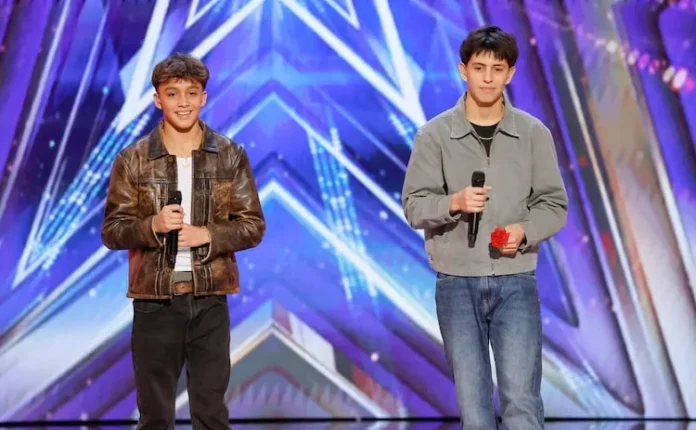

 Two teenage brothers walked onto the stage looking calm and humble, giving no hint that they had a connection to one of the world’s biggest music stars. What happened next left the judges—and the audience—completely speechless.

 They explained that they had prepared an original song, hoping to show everyone who they were as artists. At first, nothing seemed out of the ordinary… until the judges started asking more about their family.
 The brothers casually mentioned that their famous uncle was Bruno Mars!
  The audience gasped, and the judges couldn’t believe what they had just heard. Instead of relying on that famous connection, however, the teens made it clear they wanted to earn recognition through their own talent and hard work.

 From the very first note, it was obvious they weren’t depending on a famous last name. Their harmonies blended beautifully, the lyrics were heartfelt, and the melody was instantly memorable.
 They praised the brothers for stepping out of their famous relative’s shadow and proving they had their own unique voices. Rather than trying to imitate anyone else, they showcased a style that felt fresh and genuine.

 Fans couldn’t stop talking about the surprise family connection and, even more importantly, the brothers’ incredible performance.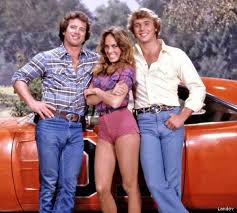
 >>>Little-known mistakes and bloopers in Dukes of Hazzard Please