Before the confetti, before the roar of the crowd, there is the hush. America’s Got Talent lives for that hush—those seconds when a life can tilt from ordinary to unforgettable. This year’s Golden Buzzer showcase strings those moments into a single charge of adrenaline and hope. It’s not just a recap. It’s a portrait of how one decision, one song, one leap can change everything.
A 14-year-old walks out—and the room tilts
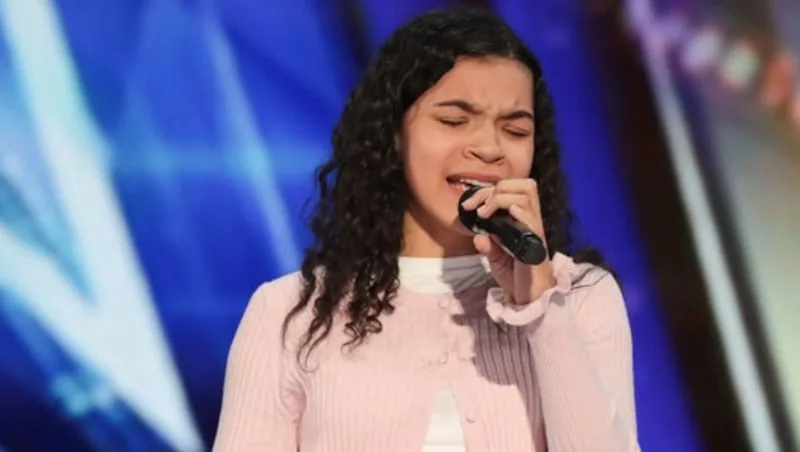
She introduces herself without fuss. “Lei,” she says. From Texas. She’s fourteen. She admits she’s “excited and nervous,” and a judge gently replies, “If you’re nervous, that means you’re alive.” There’s light banter—water, even the offer of a sandwich—which only sharpens the edge of what comes next. When Lei begins, the panel leans in. One judge all but gives up on language:
“Shall I tell you honestly what I think? Words aren’t necessary.”
Then mayhem—in the best sense. The press of a hand, the surge of gold. In the confusion, Lei darts off to celebrate. Backstage voices scramble:
“Lei. Lei, where are you? … Go back and talk to the judges.”
She returns breathless. “I’m sorry for leaving you,” she says. Then the bickering that only happens when everyone wanted to be the one:
“He stole her from me, just so you guys know.”
There’s praise that lands like a promise:
“You got such a gift, and now you take this opportunity… This is why we do this.”
And a welcome that sinks into a young singer’s bones:
“You know how special you are. But now I hope you do because now you’re Simon’s golden buzzer. How does that make you feel?”
Lei answers in the smallest, truest way. “Really good.” And you believe her.
From seat to stage—then straight to gold
A year ago, Luke Toledo sat in the audience. Born in Cuba, raised in Hialeah, Florida, he looked at a judge and made an audacious vow. He repeats it now, smiling like someone who has already seen this in his head:
“Remember this face because next year I’ll be on this stage, and I expect that golden buzzer.”
His song is original. His title is confession and compass: Seat to Stage. He raps his own prologue, a DIY climb from balcony boredom to viral rap battles, from street performances on Miami Beach to this shot under the theater lights:
“06/06/2024, I was chilling on the balcony scrolling, and I was bored… went from sitting in that seat to now I’m here on stage.”
There are critiques—breath control fades, emotion spills over. But something else rises, the thing that outlasts perfection. One judge nails it: authenticity. Another, searching for how to place this moment, asks the question that reveals everything:
“How did you know?”
Luke’s answer is both a backstory and a vow fulfilled. At thirteen, he fought leukemia. Alone at night in a hospital room, he started to write. Later, he says it cleanly, without flourish:
“I manifested it.”
The Golden Buzzer he predicted finds him. Confetti falls. A voice calls from just offstage:
“You deserve it, buddy. This is just the beginning.”
In a show that worships the now, Luke makes the case for the long game—the kind you write and rewrite until it comes true.
A family act, paws and pirouettes
In strolls a troupe from Edmonton, Alberta, wearing the ease of people who grew up in the same rooms. “Hi. We’re the ACRO crew,” they say. Sisters, cousins, all ages—“I’m the oldest at 21,” one offers, and then a proud point to the youngest: seven. The money question comes—how would they split a win?—and the answer is practical and generous: upgrade the studio, more space, a hangout area. The performance that follows detonates any skepticism. This isn’t a novelty act. It’s choreography braided with canine chaos, precision and play, the dogs literally leaping into the dancers’ story.
The panel melts. One judge squeals it like a headline:
“It’s like my two favorite acts, which is dancing and dog act together.”
Another whoops at the scale of it:
“I have never ever seen anything like this in my life.”
And the simplest joy bubbles up:
“You blew me away. I love the dogs… I love everything about you.”
When the gold lands, it’s almost comic—someone jokes about getting “licked to death.” But under the laughter is the undeniable stamp of a moment only this stage makes possible.
A magician comes back bigger
Yoo Hojin steps into familiar light. “I was here season seventeen,” he says, “but Simon told me that I needed something bigger.” Coming back can be its own trick—harder than anything with cards or coins. A judge frames it kindly:
“Sometimes it’s just good to come back and do it better.”
What he delivers feels like a lesson in escalation. The craft is tighter, the canvas wider, the air around the stage charged by that knowing grin: I heard you; watch this. It’s not only technique that’s bigger. It’s intent—the courage to risk your legacy on a new idea, in public, with the world watching. When the praise arrives, it borrows the scale of Vegas.
“You guys deserve your own your own hotel in Vegas.”
On a night of gold, the message inside the magic is the one worth stealing: brave the return. Come back bigger.
A voice from Sydney, a switch flips
Laura Dee crosses an ocean to stand under this light. “I started working with my parents,” she says, “but I decided to come here because I wanted to kind of pursue my dream, and I feel like this is the stage where all dreams come true.” Her song is a reclaiming. She frames it bluntly:
“Ladies and gentlemen, I’m gonna tell you about one of the many men. Name is irrelevant. He is irrelevant.”
It builds, a survivor’s melody. One judge is first out of the chair—“I loved it.” Another maps the room’s reaction:
“There’s something about you that is very special, and I think everybody felt it tonight.”
Then comes the surprise within the surprise:
“This is the kind of thing that I’ve been looking for. I’ve been looking for a surprise… I’ve been looking for something unexpected. You are a star, and I wanna do something special.”
The Golden Buzzer falls like a curtain you can walk through. “Let me tell you something,” the judge adds, almost as a benediction. “You deserve this.”
“I took a few days off to come here”
When Isaac Atkins speaks, the room leans into the timbre first. “My name is Isaac Atkins… I’m 23, and I’m from Lewiston, Maine. And I’m a sergeant in the US army.” Asked if he’s still serving, he nods. “I am on leave right now… I took a few days off to come here.” It’s a small sentence that says everything about distance and desire.
What follows is the kind of sound that makes strangers go quiet together. This is the talent that shows up without armor, even when a life has taught you to wear it. The judges don’t need to gild it. The audience already has.
Gold as argument, gold as answer
Across the night, a theme keeps pulsing: the race to claim a discovery. Judges tease and tangle about who presses first, who “stole” whose star. You hear it in the banter after Lei’s performance—“He stole her from me”—and in the way the panel openly calculates in real time. One judge admits the instinct that runs the table: “If I don’t press it, someone else is gonna press it.” That urgency—sometimes messy, often funny—reveals how the Golden Buzzer is more than a button. It’s an argument about taste, belief, and the odds of lightning striking twice.
The stories echo one another in the spaces between genre. A rapper who once battled cancer. A Canadian family that flips with dogs and comes down smiling. A magician who returns because feedback wasn’t a finish line; it was a map. A young singer from Sydney who renames her past and claims her future with the same note. A soldier who trades a few days of leave for a chance to sing on the biggest talent stage in the world. Each presses against a limit—age, fear, time, the pace of a breath—and then past it.
And threaded through it all is that confessional refrain the show returns to again and again: this is why we do this. The phrase turns up on the panel not as a brand line, but as relief. Relief that someone’s gift found a room big enough to hold it. Relief that the stakes were worth the nerves. Relief that a promise kept—like Luke’s “remember this face”—can ring louder than any critique.
There’s a moment late where the wisdom gets quiet and clear. A judge, speaking to a newly minted Golden Buzzer act, offers what sounds like both congratulations and assignment: keep going. The longer version arrives in an afterglow pep talk that could be addressed to anyone who ever dared to try: keep dreaming, keep manifesting, keep doing what you do. Look—when you do, it works.
That’s the power of a gold press on this stage. It doesn’t make the artist. It reveals them—and then dares them to meet the promise the confetti implies.
There are more acts inside this video—more flips, more high-wire magic, more big-stage ambition—but the thread remains the same. Every Golden Buzzer here is less a finish than a door being flung open. Step through it. Then keep walking.
Watch the full showcase to feel the hush before each leap, the gasp when it lands, and the thud of gold when belief turns into sound. The season will move on. These moments won’t.