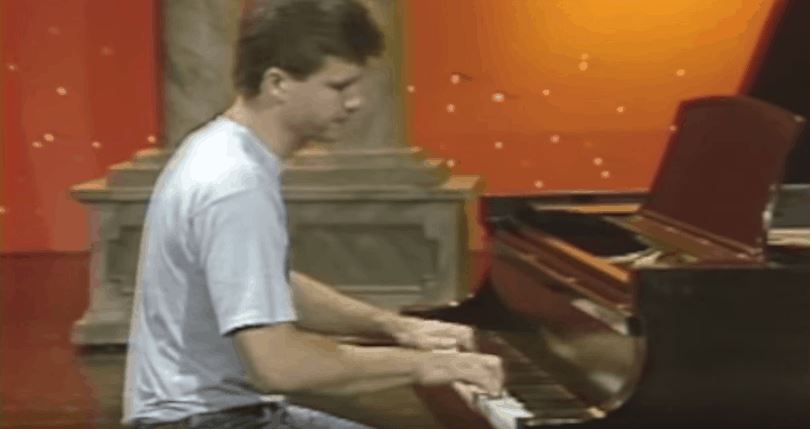
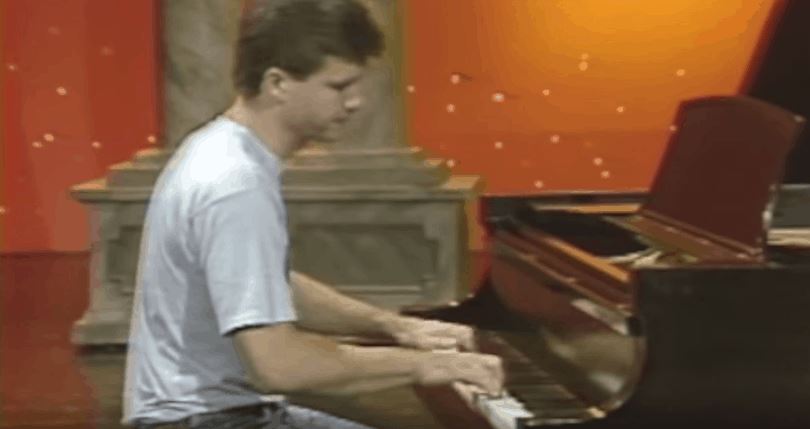
Life is filled with unexpected twists and turns, and for David Tolley, a single moment altered the trajectory of his entire life. Back in December 19, 1985, he found himself in the studio audience for The Tonight Show, hosted by Johnny Carson, when something completely unexpected took place. Carson shared the unfortunate news that the planned guest, a talented classical pianist named Horatio Gutierrez, had suffered an injury to his hand, rendering him unable to perform. In a seamless transition, Carson asked if there was anyone in the audience with piano-playing skills.
Tolley, a passionate piano player since childhood, eagerly offered to help. He stepped onto the stage and delivered a captivating rendition of “Memory” from the beloved musical Cats. His spontaneous performance garnered a standing ovation from the audience and catapulted him to a new level of recognition.
After the show, Tolley’s phone was constantly ringing. He was flooded with calls from people offering him exciting opportunities, such as gigs on cruise ships and acting roles in movies. His life took a dramatic turn after an unexpected meeting on a late-night talk show.
David Tolley’s journey from an audience member to a celebrated performer serves as a powerful lesson in the importance of being ready to embrace the unexpected. Life can pivot on a dime, and it is crucial to remain open to new experiences and challenges. His story is not just about talent; it emphasizes the need for courage, preparedness, and the willingness to step out of one’s comfort zone. In a world where the unexpected can lead to incredible opportunities, Tolley’s tale encourages us all to be vigilant and ready to seize the moment whenever it presents itself. His message resonates deeply, reminding us that while we cannot control everything, we can control how we respond to the challenges and opportunities life throws our way.As Tolley navigated this new chapter, he was determined not to let the whirlwind of fame sweep him away. He focused on honing his craft, seeking out new musical styles, and collaborating with other artists. The vibrant world of music and performance opened up to him in ways he had never imagined. Each performance became an opportunity to connect with audiences and share his story through the universal language of music. He began experimenting with different genres, from classical to contemporary, blending his background with innovative approaches. This creative exploration not only enriched his artistic portfolio but also allowed him to reach diverse audiences, expanding his fan base beyond what he had ever thought possible.
A quiet administrative office suddenly became the center of attention when senior department officials, labor attorneys, and human resources specialists gathered for an emergency hearing. The reason? A former public safety officer had become the subject of intense debate after participating in a controversial creative media project that quickly gained attention online.
Within hours, news outlets were reporting on the story.
Social media users were sharing opinions.
Legal experts were discussing employment policies.
And community members were asking the same question:
Where does personal freedom end and professional responsibility begin?
A Career Suddenly Under Scrutiny
For years, the officer had built a reputation as a dedicated public servant.
Coworkers described the individual as professional, hardworking, and respected within the department.
Everything appeared normal.
Then details about a creative photoshoot began circulating online.
The project itself was legal and conducted outside of work hours.
However, some critics argued that participation could conflict with the professional image expected of public safety personnel.
As the discussion spread, department leaders faced growing pressure to review internal policies.
The Rules Behind the Badge
Many people do not realize that public safety employees often operate under strict codes of conduct.
These rules extend beyond normal workplace expectations.
Agencies frequently require employees to maintain public trust, professional behavior, and ethical standards both on and off duty.
Public image clauses are often included within employment agreements.
The purpose is to protect the reputation of the institution and maintain confidence within the community.
As questions increased, officials launched a formal review process to determine whether any policies had been violated.
The Investigation Begins
Internal affairs investigators began examining department guidelines.
Human resources teams reviewed employment records.
Legal advisors analyzed policy language.
The goal was not to make assumptions but to determine whether established standards had been breached.
Department administrators emphasized that all employees deserve a fair review process.
At the same time, community leaders stressed the importance of accountability and transparency.
The investigation quickly became one of the most discussed topics within the region.
Public Opinion Splits in Two
The situation created strong opinions.
Some residents believed public employees should be held to higher standards because they represent important institutions.
Others argued that individuals have a right to personal expression outside of work.
Social media amplified both perspectives.
Videos, articles, and opinion pieces spread rapidly.
Many people who had never heard of the officer suddenly found themselves debating employment policies and personal freedom.
The discussion expanded far beyond one individual.
It became a broader conversation about modern careers and digital identity.
The Challenge of Modern Media
Today’s professionals often operate in two worlds.
One is their workplace.
The other is the digital world.
Personal brands, social media accounts, and creative projects have become common parts of modern life.
This creates new challenges for employers.
Organizations must balance employee rights with institutional expectations.
Public relations specialists noted that situations involving online visibility can create complex reputation risks.
As a result, many organizations now invest heavily in Corporate Brand Reputation Management Services to address emerging challenges.
Labor Representatives Speak Out
Labor union representatives closely monitored the case.
They emphasized that employees should receive due process and clear explanations regarding disciplinary actions.
Union officials argued that policies must be applied consistently
Legal advocates noted that disputes involving workplace conduct often become highly complicated.
Questions may arise about contracts, policy language, and employee protections.
In some cases, workers seek guidance from Employment Law Wrongful Termination Attorneys or specialists providing Labor Contract Dispute Legal Representation.
Such professionals help determine whether employment actions comply with applicable laws and contractual obligations.
Life After Public Service
Career transitions can be difficult.
For individuals leaving public service, entering private industries often requires major adjustments.
Some former government employees move into consulting.
Others enter media, education, business, or creative fields.
However, public attention can make these transitions especially challenging.
Friends, family members, and former colleagues may all have different opinions about career choices.
Public scrutiny often adds emotional pressure during an already difficult period.
Several career advisors observed that rebuilding a professional identity can take time.
Media Coverage Continues
News organizations continued following developments closely.
Legal commentators analyzed agency procedures.
Public relations professionals discussed reputation management strategies.
Community members attended meetings and shared concerns.
The story remained in the headlines because it involved several important issues at once.
Employment rights.
Professional standards.
Freedom of expression.
Public trust.
Each topic generated strong reactions from different groups.
The Broader Legal Perspective
Experts say employment disputes involving public-sector workers often involve multiple layers of review.
Administrative hearings may examine policy compliance.
Employment specialists may evaluate contractual obligations.
Labor representatives may review disciplinary procedures.
Organizations frequently consult Executive Civil Rights Defense Law Firm professionals when complex workplace rights issues arise.
Government agencies may also rely on Government Agency Liability Insurance programs to manage risks associated with employment disputes and administrative actions.
These systems are designed to provide structured processes rather than emotional reactions.
Managing Reputation in the Digital Age
One lesson from the controversy is how quickly information spreads.
A single project can become national news within hours.
This creates significant challenges for employers and employees alike.
Organizations increasingly invest in Corporate Brand Reputation Management Services to monitor public discussions, address misinformation, and maintain trust.
At the same time, professionals are encouraged to understand how public activities may affect future career opportunities.
Digital footprints can have long-lasting effects.
A Debate With No Simple Answer
As the investigation continued, one thing became clear.
There was no simple answer.
Some people focused on individual freedom.
Others focused on professional responsibility.
Many believed both concerns were important.
The controversy highlighted how modern employment disputes often involve legal, ethical, and social questions all at the same time.
Conclusion
The case sparked a broader conversation about public service, workplace expectations, and personal expression in the digital era.
While opinions remain divided, the situation demonstrates why organizations rely on clear policies, fair investigations, and professional review procedures.
As experts in Employment Law Wrongful Termination Attorneys, Labor Contract Dispute Legal Representation, Corporate Brand Reputation Management Services, Government Agency Liability Insurance, and Executive Civil Rights Defense Law Firm services continue analyzing similar cases, one lesson stands out: navigating the line between personal freedom and professional responsibility has become one of the defining workplace challenges of the modern age.
It started with a message that looked completely normal.
Michael, a small business owner from Texas, received an email that appeared to be from his bank. It warned him about “suspicious activity” on his account and urged him to act quickly.
At first glance, everything looked real—the logo, the language, even the email address.
But something felt… slightly off.
That small feeling ended up saving him.
How the Scam Worked
The message asked Michael to click a link and “verify” his account details.
This is a common tactic used in online scams known as phishing.
Here’s how it usually works:
A fake message creates urgency
A link leads to a realistic-looking website
The victim enters personal or financial details
Scammers collect the information
This type of fraud targets trust and quick reactions
The Warning Signs Michael Noticed
Before clicking the link, Michael paused and looked closer.
He noticed:
The email had a slight spelling error
The web link didn’t match his bank’s official site
The message pressured him to act immediately
These small signs are often the biggest clues.
His awareness helped him avoid falling into the trap.
How the Scam Was Stopped
Instead of clicking the link, Michael contacted his bank directly using their official phone number.
The bank confirmed it was a fake message.
He then reported the incident, helping authorities track similar scam attempts.
Situations like this highlight the importance of Fraud Prevention Services, which work to identify and stop such threats before they spread.
Scammers rely on psychology more than technology.
They create urgency, fear, or excitement to push people into quick decisions.
This is why Cyber Security Awareness is one of the most powerful tools people can have today.
The more aware you are, the harder it is for scammers to succeed.
Protecting Your Identity and Finances
Once scammers get access to personal data, they may attempt identity theft or financial fraud.
That’s why Identity Theft Protection is important, especially for people who frequently use online banking or digital platforms.
Basic safety habits can go a long way in protecting your information.
Simple Tips for Online Safety
To stay safe, remember:
Never click suspicious links
Always verify messages through official sources
Avoid sharing personal details online
Use strong and unique passwords
Keep your devices updated
The Lesson Behind the Story
Michael didn’t lose money—but many others do every day because scams are becoming more advanced.
His story shows that awareness, not luck, is what makes the difference.
Final Thought
Online scams don’t always look dangerous—they often look normal.
But with the right knowledge, they can be spotted and stopped.
Through awareness of Fraud Prevention Services, strong Cyber Security Awareness, use of Identity Theft Protection, and careful attention to Online Financial Safety, anyone can reduce their risk significantly.
Because in today’s digital world…
One small pause can protect everything you’ve worked for.
What was supposed to be the beginning of a new life ended in tragedy, manipulation and betrayal. Amidst the serene beauty of the Shillong hills, a diabolical plan was quietly unfolding. And when the fog lifted, what emerged was a story so disturbing it seemed straight out of a thriller.
On May 20, Indian businessman Raja Raghuvanshi embarked on his honeymoon with his new wife, Sonam Raghuvanshi. The chosen destination: Shillong, in the state of Megalaia, known for its bucolic landscapes and romantic atmosphere. But behind the celebratory trip, a deadly plot was hidden.
A few days after their arrival, the couple simply disappeared. The news began to circulate discreetly among family and friends, while local police struggled to find them due to dense fog and constant rain in the mountainous region. It was only after days of searching that Raja’s body was found in an advanced state of decomposition in a remote canyon — without documents, without a wedding ring, and with obvious signs of violence.
At that moment, there seemed to be only one culprit behind the tragedy: Raj Kushwaha, Sonam’s alleged lover. At first, everything indicated that he had orchestrated the murder out of jealousy. However, the investigation would soon take a surprising — and even more sinister — turn.
As the police dug deeper into the case, disturbing elements emerged. What appeared to be a crime of passion committed on impulse turned out to be a premeditated, cold-blooded murder. And at the center of it all was the victim’s own wife, Sonam Raghuvanshi.
According to authorities, Sonam allegedly manipulated Raj with promises of love and a new life together — but only after her husband was out of the way. To ensure the success of the plan, Raj did not act alone. He recruited three accomplices: Vishal Singh, Anand Kurmi and Akash Rajput. The promise? Generous financial rewards in exchange for Raja’s life.
The group traveled to Shillong discreetly, with precise instructions. Sonam kept them informed every step of the way, sharing his location in real time. Between May 23 and 24, Raja was killed. The official version is still investigating the details of the crime, but there are indications that he was surprised and pushed from the gorge.
After the murder, everyone involved returned to the city of Indore. There, Raj met Sonam again, believing that the worst was over — and that their promise to be together would finally be fulfilled. But fate had another twist in store: Sonam was deceiving him too.
In a twist of fate, the police discovered that Sonam was secretly having an affair with a third man. Raj, who had been her accomplice and lover, had also fallen victim to her manipulations. After carrying out the plan, Sonam gave Raj directions to a hiding place, the exact location of which only she knew. A move that is now known to have been part of a plan to get rid of him as well.
It was the tracking of the cell phones that led the police to solve the mystery. The data showed constant communication between Sonam and Raj during the trip — enough evidence to trigger her arrest. On June 8, the woman was located and arrested. During questioning, she eventually confessed to her role in the crime.
Police are now trying to understand the role of the third man and whether he was also involved in the planning. It is suspected that Sonam planned to elope with him after getting rid of both her husband and her accomplice lover.
The case has caused a stir across India — not just because of the act of violence, but because of the dark plot that hides behind a moment considered sacred: the beginning of a life together. The image of the honeymoon, traditionally surrounded by love and hope, has been tarnished by a coldness that is difficult to understand.
The story of Raja, Sonam and their accomplices in the crime is more than just a police case: it is a warning about the depths of ambition, lies and manipulation. In a time of increasingly exposed and connected relationships, this brutal crime reveals how dark intentions can be disguised under the most convincing masks.
As the investigations continue, the country follows, perplexed, each new detail of a case that exposed the cruelest side of human relationships — and that turned a honeymoon into a true nightmare.
Student records his teacher without imagining what it would cause on social media
What began as a casual classroom video ended up unleashing a wave of reactions, controversies, and reflections on respect, privacy, and the power of social media.
Mexico City – A high school student recorded his teacher during a class, unaware that the seemingly innocuous videowould go viral within hoursand cause a stir on social media. The clip, originally uploaded to TikTok, shows the teacher passionately explaining a history topic while using expressive gestures and a firm yet warm voice.
The video’s description simply read:“My teacher takes her job way too seriously . “Within hours, the video racked up over3 million views, hundreds of thousands of likes, and thousands of comments… but the tone of the responses divided the audience.
Many users applauded the teacher’s dedication. Comments like“I wish all teachers taught like this!”or“You can tell she loves what she does”flooded the post. However, there were also those who chose to mock her, imitating her tone of voice, exaggerating her gestures, or editing the video to ridicule her.
Within hours, memes, musical remixes, and even “challenges” imitating the teacher were created, generating growing concern among the educational community.
Days later, it was revealed that the teacher, identified asMaría Eugenia Rivas, 43 years old and with more than 20 years of experience,was unaware that she had been recorded, much less that it had gone viral.
“I found out because a niece showed me the video. At first I laughed, but then I saw the offensive comments, the mockery… and it hurt. I never gave permission to be recorded, much less to be exposed like that,” she stated in an interview with a local media outlet.
Rivas also acknowledged that, although the viral video brought praise, the situation made her feel vulnerable. “I’m human. I try to do my best for my students, but I didn’t expect to become a trending topic for something as everyday as teaching.”
This case has opened a new debate in the field of education:Is it ethical to record teachers without their consent? To what extent can social media alter a person’s life without their permission?
Education and digital law specialists pointed out that, although phones are everywhere, recording and distributing videos without authorization can represent aviolation of privacy, especially if the content is used for purposes of ridicule or public shaming.
“We live in a culture of constant exposure, but it’s not all entertainment. There are real consequences for the people behind viral content,” warned cyberethics lawyer Valeria Córdova.
Your email address will not be published.Required fields are marked*
Save my name, email, and website in this browser for the next time I comment.
Human beings have always been fascinated by the relationship between physical appearance and inner character. Across many cultures and throughout history, people have searched for clues about personality in everything from facial expressions and posture to hand shape and body proportions. The belief that certain physical traits might reflect aspects of temperament, lifestyle, or emotional tendencies has appeared in folklore, philosophy, and popular culture for centuries.
Today, while modern science emphasizes the importance of psychology, genetics, life experiences, and environment in shaping personality, many people still enjoy exploring symbolic interpretations connected to physical features. One particularly lighthearted example is the idea that the shape of a person’s legs might reveal subtle hints about their behavior, confidence, relationships, or outlook on life.
It is important to make one thing clear from the beginning: there is no scientific evidence proving that leg shape determines personality. These interpretations belong more to the world of cultural traditions, entertainment, and self-reflection than factual psychology. Similar to personality quizzes, zodiac signs, or body-language theories, they are often appreciated because they encourage curiosity and conversation rather than because they offer measurable truths.
The historical roots of these ideas go back much further than many people realize. Ancient societies often believed the human body reflected deeper spiritual or psychological qualities. In some traditions, physical symmetry was associated with balance and harmony, while posture and movement were thought to reveal confidence, discipline, or emotional state. Early forms of physiognomy—the belief that appearance reflects character—became popular in various parts of the world, even though modern science later rejected many of its claims.
It is important to make one thing clear from the beginning: there is no scientific evidence proving that leg shape determines personality. These interpretations belong more to the world of cultural traditions, entertainment, and self-reflection than factual psychology. Similar to personality quizzes, zodiac signs, or body-language theories, they are often appreciated because they encourage curiosity and conversation rather than because they offer measurable truths.
The historical roots of these ideas go back much further than many people realize. Ancient societies often believed the human body reflected deeper spiritual or psychological qualities. In some traditions, physical symmetry was associated with balance and harmony, while posture and movement were thought to reveal confidence, discipline, or emotional state. Early forms of physiognomy—the belief that appearance reflects character—became popular in various parts of the world, even though modern science later rejected many of its claims.
Despite the lack of scientific support, interest in appearance-based personality theories has never fully disappeared. In fact, social media and online lifestyle culture have given these ideas new life. Articles, quizzes, and viral posts about body language, facial traits, or leg shapes continue to attract attention because people naturally enjoy learning about themselves and comparing interpretations with friends.
Leg-shape personality theories are usually presented in a playful and non-serious way. Different leg alignments or proportions are often linked symbolically to certain traits. For example, some interpretations suggest that people with straight legs are practical, confident, and direct in communication. Others claim that individuals with slightly curved legs may be more creative, emotional, or independent-minded. Additional theories associate different walking styles or posture with energy levels, openness, or social behavior.
Again, these descriptions should not be viewed as factual definitions of who someone is. Human personality is far too complex to be explained by physical appearance alone. However, many people still find these readings entertaining because they encourage self-observation and discussion. Even when the descriptions are broad, people often enjoy identifying with traits that feel relatable or flattering.
Psychologists sometimes explain the popularity of these theories through a concept known as the “Barnum effect.” This refers to the tendency for people to accept vague or generalized personality descriptions as personally meaningful. It is the same reason horoscopes and personality quizzes often feel surprisingly accurate. Humans naturally search for patterns and meaning, especially when the information connects to identity or self-image.
There is also a social element involved. Sharing personality theories with friends can create fun conversations and moments of connection. People compare interpretations, laugh about similarities, and reflect on their habits or behaviors in a relaxed way. In this sense, the appeal is often less about believing the theories literally and more about enjoying the experience of self-reflection.
At the same time, it is important to approach these ideas with balance and healthy perspective. Physical traits should never be used to judge someone’s worth, intelligence, or character. Appearance-based assumptions can sometimes reinforce stereotypes or unrealistic beauty standards if taken too seriously. Every body is unique, and no specific shape or feature determines the value of a person.
In fact, one of the most meaningful takeaways from these conversations may be the importance of embracing individuality. Bodies naturally vary in countless ways due to genetics, lifestyle, health, and personal history. Confidence and self-acceptance often have far greater influence on how people feel and interact with the world than any physical characteristic itself.
Modern discussions around body positivity and self-image increasingly encourage people to appreciate their natural features rather than constantly comparing themselves to idealized standards. Whether someone’s legs are straight, curved, athletic, or slender says far less about their personality than qualities like kindness, resilience, empathy, and integrity.
Ultimately, the continued popularity of leg-shape personality theories reflects something deeply human: curiosity about identity and the desire to understand ourselves and others. These interpretations remain part of lifestyle culture because they are imaginative, playful, and easy to engage with. When approached with humor and perspective, they can offer harmless entertainment and even moments of self-reflection.
But in the end, the most important truth is simple: no physical feature can fully define who you are. Personality is shaped by experiences, choices, relationships, values, and growth over time. And that complexity is far more interesting than any theory based solely on appearance.
Life is filled with unexpected twists and turns, and for David Tolley, a single moment altered the trajectory of his entire life. Back in December 19, 1985, he found himself in the studio audience for The Tonight Show, hosted by Johnny Carson, when something completely unexpected took place. Carson shared the unfortunate news that the planned guest, a talented classical pianist named Horatio Gutierrez, had suffered an injury to his hand, rendering him unable to perform. In a seamless transition, Carson asked if there was anyone in the audience with piano-playing skills.
Tolley, a passionate piano player since childhood, eagerly offered to help. He stepped onto the stage and delivered a captivating rendition of “Memory” from the beloved musical Cats. His spontaneous performance garnered a standing ovation from the audience and catapulted him to a new level of recognition.
After the show, Tolley’s phone was constantly ringing. He was flooded with calls from people offering him exciting opportunities, such as gigs on cruise ships and acting roles in movies. His life took a dramatic turn after an unexpected meeting on a late-night talk show.
David Tolley’s journey from an audience member to a celebrated performer serves as a powerful lesson in the importance of being ready to embrace the unexpected. Life can pivot on a dime, and it is crucial to remain open to new experiences and challenges. His story is not just about talent; it emphasizes the need for courage, preparedness, and the willingness to step out of one’s comfort zone. In a world where the unexpected can lead to incredible opportunities, Tolley’s tale encourages us all to be vigilant and ready to seize the moment whenever it presents itself. His message resonates deeply, reminding us that while we cannot control everything, we can control how we respond to the challenges and opportunities life throws our way.As Tolley navigated this new chapter, he was determined not to let the whirlwind of fame sweep him away. He focused on honing his craft, seeking out new musical styles, and collaborating with other artists. The vibrant world of music and performance opened up to him in ways he had never imagined. Each performance became an opportunity to connect with audiences and share his story through the universal language of music. He began experimenting with different genres, from classical to contemporary, blending his background with innovative approaches. This creative exploration not only enriched his artistic portfolio but also allowed him to reach diverse audiences, expanding his fan base beyond what he had ever thought possible.
Life is filled with unexpected twists and turns, and for David Tolley, a single moment altered the trajectory of his entire life. Back in December 19, 1985, he found himself in the studio audience for The Tonight Show, hosted by Johnny Carson, when something completely unexpected took place. Carson shared the unfortunate news that the planned guest, a talented classical pianist named Horatio Gutierrez, had suffered an injury to his hand, rendering him unable to perform. In a seamless transition, Carson asked if there was anyone in the audience with piano-playing skills.
Tolley, a passionate piano player since childhood, eagerly offered to help. He stepped onto the stage and delivered a captivating rendition of “Memory” from the beloved musical Cats. His spontaneous performance garnered a standing ovation from the audience and catapulted him to a new level of recognition.
After the show, Tolley’s phone was constantly ringing. He was flooded with calls from people offering him exciting opportunities, such as gigs on cruise ships and acting roles in movies. His life took a dramatic turn after an unexpected meeting on a late-night talk show.
David Tolley’s journey from an audience member to a celebrated performer serves as a powerful lesson in the importance of being ready to embrace the unexpected. Life can pivot on a dime, and it is crucial to remain open to new experiences and challenges. His story is not just about talent; it emphasizes the need for courage, preparedness, and the willingness to step out of one’s comfort zone. In a world where the unexpected can lead to incredible opportunities, Tolley’s tale encourages us all to be vigilant and ready to seize the moment whenever it presents itself. His message resonates deeply, reminding us that while we cannot control everything, we can control how we respond to the challenges and opportunities life throws our way.As Tolley navigated this new chapter, he was determined not to let the whirlwind of fame sweep him away. He focused on honing his craft, seeking out new musical styles, and collaborating with other artists. The vibrant world of music and performance opened up to him in ways he had never imagined. Each performance became an opportunity to connect with audiences and share his story through the universal language of music. He began experimenting with different genres, from classical to contemporary, blending his background with innovative approaches. This creative exploration not only enriched his artistic portfolio but also allowed him to reach diverse audiences, expanding his fan base beyond what he had ever thought possible.
His Students Had NO IDEA He Could Sing—Wait Until You Hear This Teacher’s Powerhouse Voice! happy
In one of the most surprising and high-octane auditions from Britain’s Got Talent 2022, 23-year-old Tom Ball stepped onto the stage with a humble smile and a story that immediately charmed the judges. A secondary school teacher from West Sussex, Tom revealed that almost none of his students even knew he could sing. He kept his audition a secret, hoping to surprise his classes with a performance they would never forget.
When Tom began his rendition of “Writing’s on the Wall” by Sam Smith, the auditorium fell into a stunned silence. Within seconds, it was clear that his voice was a “powerhouse” of operatic strength and emotional depth. His control over the difficult high notes and the sheer resonance of his tone drew comparisons to musical theater legend Michael Ball. As the song reached its soaring climax, the audience and the judges were on their feet, witnessing what many described as one of the best singing auditions in the show’s 16-year history.
His Students Had NO IDEA He Could Sing—Wait Until You Hear This Teacher’s Powerhouse Voice! happy
In one of the most surprising and high-octane auditions from Britain’s Got Talent 2022, 23-year-old Tom Ball stepped onto the stage with a humble smile and a story that immediately charmed the judges. A secondary school teacher from West Sussex, Tom revealed that almost none of his students even knew he could sing. He kept his audition a secret, hoping to surprise his classes with a performance they would never forget.
When Tom began his rendition of “Writing’s on the Wall” by Sam Smith, the auditorium fell into a stunned silence. Within seconds, it was clear that his voice was a “powerhouse” of operatic strength and emotional depth. His control over the difficult high notes and the sheer resonance of his tone drew comparisons to musical theater legend Michael Ball. As the song reached its soaring climax, the audience and the judges were on their feet, witnessing what many described as one of the best singing auditions in the show’s 16-year history.