When 18-year-old Rizzlo Jones walked onto the X Factor stage, the judges were completely fooled by his clean-cut look. Britney Spears even mentioned that he looked like a “southern twin,” convinced he was about to belt out a country ballad. But Rizzlo from Kansas City had a completely different plan to inspire the world. He wasn’t there to sing; he was there to show off his “blessed birth name” and a talent that rarely makes it to the big stage. The tension in the room was palpable as he prepared to reveal his true self.
Instead of a traditional song, Rizzlo announced he would be doing something incredibly risky: a freestyle rap. He invited the judges to give him a random subject to prove he was making it up on the spot. Simon Cowell threw out “X Factor,” and the beat dropped, changing the energy of the entire auditorium instantly. What followed was a lyrical masterclass that had everyone on their feet. Rizzlo didn’t just rap; he commanded the stage with a confidence he’s had since he “learned the ABCs.”
Why this audition is going viral:
The Shock Factor: The judges’ faces when he started rapping instead of singing were priceless.
The Britney Shout-out: He cleverly worked a “Oops, I Did It Again” reference into his rap while Britney watched.
Pure Talent: L.A. Reid, a legend in the rap game, was visibly impressed by his natural flow.
Positive Vibes: Rizzlo’s goal is to keep rap positive and inspire people, avoiding negative stereotypes.
By the time he finished, the auditorium was electric. Louis Walsh even called him a “real little pop star” and noted how he literally lit up the entire room. Demi Lovato was so impressed she called him a “young Vanilla Ice baby” in the best way possible. It was a unanimous four yeses for the young man from Kansas City. His journey from graduating high school to standing in front of thousands was completed in one legendary moment.
Watch the full freestyle that left the judges speechless below!
When 18-year-old Rizzlo Jones walked onto the X Factor stage, the judges were completely fooled by his clean-cut look. Britney Spears even mentioned that he looked like a “southern twin,” convinced he was about to belt out a country ballad. But Rizzlo from Kansas City had a completely different plan to inspire the world. He wasn’t there to sing; he was there to show off his “blessed birth name” and a talent that rarely makes it to the big stage. The tension in the room was palpable as he prepared to reveal his true self.
Instead of a traditional song, Rizzlo announced he would be doing something incredibly risky: a freestyle rap. He invited the judges to give him a random subject to prove he was making it up on the spot. Simon Cowell threw out “X Factor,” and the beat dropped, changing the energy of the entire auditorium instantly. What followed was a lyrical masterclass that had everyone on their feet. Rizzlo didn’t just rap; he commanded the stage with a confidence he’s had since he “learned the ABCs.”
Why this audition is going viral:
The Shock Factor: The judges’ faces when he started rapping instead of singing were priceless.
The Britney Shout-out: He cleverly worked a “Oops, I Did It Again” reference into his rap while Britney watched.
Pure Talent: L.A. Reid, a legend in the rap game, was visibly impressed by his natural flow.
Positive Vibes: Rizzlo’s goal is to keep rap positive and inspire people, avoiding negative stereotypes.
By the time he finished, the auditorium was electric. Louis Walsh even called him a “real little pop star” and noted how he literally lit up the entire room. Demi Lovato was so impressed she called him a “young Vanilla Ice baby” in the best way possible. It was a unanimous four yeses for the young man from Kansas City. His journey from graduating high school to standing in front of thousands was completed in one legendary moment.
Watch the full freestyle that left the judges speechless below!
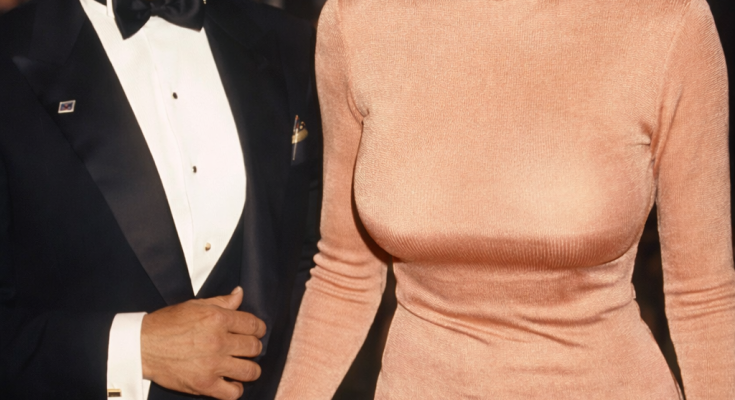
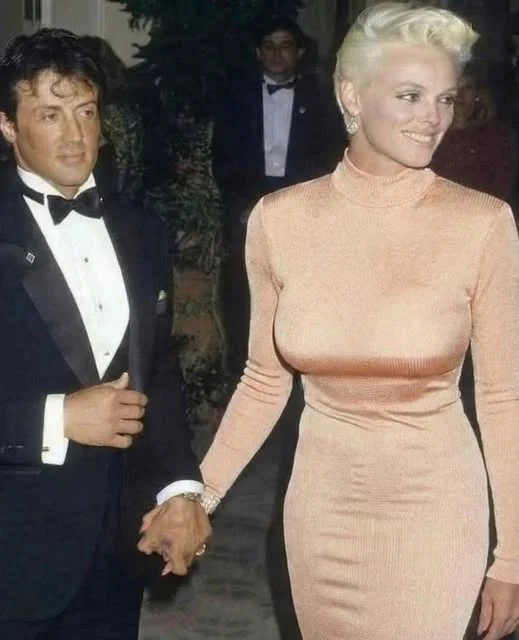
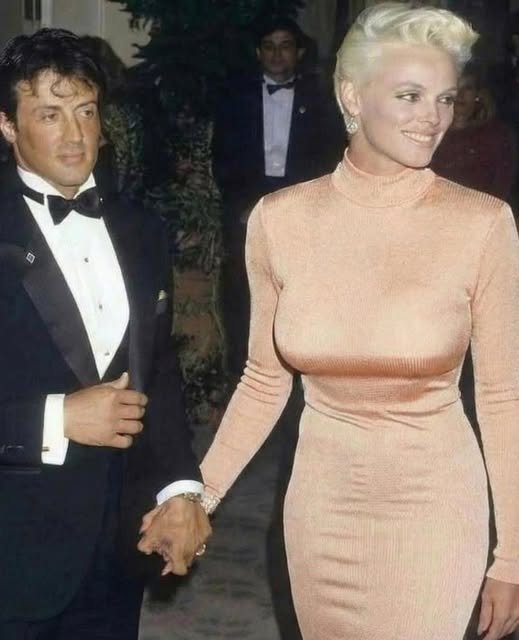
>Look what you lost, Stallone! This is how the actor’s ex-wife Bridget Nielson looks and lives today
Brigitte Nielsen, once known for her high-profile marriage to Sylvester Stallone, has reemerged in the public eye for far more inspiring reasons. At 60, the actress, model, and television personality is being celebrated for her confidence, grace, and authenticity. Her recent photos on social media have resonated with fans who see her as a symbol of resilience and the beauty of aging with self-assurance rather than fear.
Nielsen first rose to fame in the 1980s with roles in Red Sonja and Rocky IV, quickly becoming an international star. Her marriage to Stallone made her one of Hollywood’s most photographed figures, but the relationship ended after two years, drawing intense media attention. Despite the scrutiny, she continued to build her own career, refusing to let her personal life define her professional identity.
Following her acting success, Nielsen expanded into modeling and television, appearing in various European programs. Her 2018 return to Hollywood in Creed II was both nostalgic and meaningful, as she reprised her role as Ludmilla Drago. She described the experience as a professional and emotional full circle, expressing gratitude for the opportunity to revisit an iconic chapter of her career.
Throughout her journey, Nielsen has been candid about her struggles and personal growth. In a 2014 interview with Oprah Winfrey, she reflected on her battles with fame and self-doubt, emphasizing the strength that comes from acknowledging one’s mistakes. Her honesty inspired many who admired her willingness to reinvent herself.
Her personal life also reflects transformation. Nielsen, a mother of five, welcomed her youngest daughter, Frida, at age 54, describing motherhood later in life as both challenging and deeply fulfilling.
Today, Nielsen’s story represents empowerment through self-acceptance. She reminds audiences that true beauty and vitality come from confidence, courage, and embracing every stage of life.
>Look what you lost, Stallone! This is how the actor’s ex-wife Bridget Nielson looks and lives today
Brigitte Nielsen, once known for her high-profile marriage to Sylvester Stallone, has reemerged in the public eye for far more inspiring reasons. At 60, the actress, model, and television personality is being celebrated for her confidence, grace, and authenticity. Her recent photos on social media have resonated with fans who see her as a symbol of resilience and the beauty of aging with self-assurance rather than fear.
Nielsen first rose to fame in the 1980s with roles in Red Sonja and Rocky IV, quickly becoming an international star. Her marriage to Stallone made her one of Hollywood’s most photographed figures, but the relationship ended after two years, drawing intense media attention. Despite the scrutiny, she continued to build her own career, refusing to let her personal life define her professional identity.
Following her acting success, Nielsen expanded into modeling and television, appearing in various European programs. Her 2018 return to Hollywood in Creed II was both nostalgic and meaningful, as she reprised her role as Ludmilla Drago. She described the experience as a professional and emotional full circle, expressing gratitude for the opportunity to revisit an iconic chapter of her career.
Throughout her journey, Nielsen has been candid about her struggles and personal growth. In a 2014 interview with Oprah Winfrey, she reflected on her battles with fame and self-doubt, emphasizing the strength that comes from acknowledging one’s mistakes. Her honesty inspired many who admired her willingness to reinvent herself.
Her personal life also reflects transformation. Nielsen, a mother of five, welcomed her youngest daughter, Frida, at age 54, describing motherhood later in life as both challenging and deeply fulfilling.
Today, Nielsen’s story represents empowerment through self-acceptance. She reminds audiences that true beauty and vitality come from confidence, courage, and embracing every stage of life.
>Look what you lost, Stallone! This is how the actor’s ex-wife Bridget Nielson looks and lives today
Brigitte Nielsen, once known for her high-profile marriage to Sylvester Stallone, has reemerged in the public eye for far more inspiring reasons. At 60, the actress, model, and television personality is being celebrated for her confidence, grace, and authenticity. Her recent photos on social media have resonated with fans who see her as a symbol of resilience and the beauty of aging with self-assurance rather than fear.
Nielsen first rose to fame in the 1980s with roles in Red Sonja and Rocky IV, quickly becoming an international star. Her marriage to Stallone made her one of Hollywood’s most photographed figures, but the relationship ended after two years, drawing intense media attention. Despite the scrutiny, she continued to build her own career, refusing to let her personal life define her professional identity.
Following her acting success, Nielsen expanded into modeling and television, appearing in various European programs. Her 2018 return to Hollywood in Creed II was both nostalgic and meaningful, as she reprised her role as Ludmilla Drago. She described the experience as a professional and emotional full circle, expressing gratitude for the opportunity to revisit an iconic chapter of her career.
Throughout her journey, Nielsen has been candid about her struggles and personal growth. In a 2014 interview with Oprah Winfrey, she reflected on her battles with fame and self-doubt, emphasizing the strength that comes from acknowledging one’s mistakes. Her honesty inspired many who admired her willingness to reinvent herself.
Her personal life also reflects transformation. Nielsen, a mother of five, welcomed her youngest daughter, Frida, at age 54, describing motherhood later in life as both challenging and deeply fulfilling.
Today, Nielsen’s story represents empowerment through self-acceptance. She reminds audiences that true beauty and vitality come from confidence, courage, and embracing every stage of life.
>Look what you lost, Stallone! This is how the actor’s ex-wife Bridget Nielson looks and lives today
Brigitte Nielsen, once known for her high-profile marriage to Sylvester Stallone, has reemerged in the public eye for far more inspiring reasons. At 60, the actress, model, and television personality is being celebrated for her confidence, grace, and authenticity. Her recent photos on social media have resonated with fans who see her as a symbol of resilience and the beauty of aging with self-assurance rather than fear.
Nielsen first rose to fame in the 1980s with roles in Red Sonja and Rocky IV, quickly becoming an international star. Her marriage to Stallone made her one of Hollywood’s most photographed figures, but the relationship ended after two years, drawing intense media attention. Despite the scrutiny, she continued to build her own career, refusing to let her personal life define her professional identity.
Following her acting success, Nielsen expanded into modeling and television, appearing in various European programs. Her 2018 return to Hollywood in Creed II was both nostalgic and meaningful, as she reprised her role as Ludmilla Drago. She described the experience as a professional and emotional full circle, expressing gratitude for the opportunity to revisit an iconic chapter of her career.
Throughout her journey, Nielsen has been candid about her struggles and personal growth. In a 2014 interview with Oprah Winfrey, she reflected on her battles with fame and self-doubt, emphasizing the strength that comes from acknowledging one’s mistakes. Her honesty inspired many who admired her willingness to reinvent herself.
Her personal life also reflects transformation. Nielsen, a mother of five, welcomed her youngest daughter, Frida, at age 54, describing motherhood later in life as both challenging and deeply fulfilling.
Today, Nielsen’s story represents empowerment through self-acceptance. She reminds audiences that true beauty and vitality come from confidence, courage, and embracing every stage of life.
>Look what you lost, Stallone! This is how the actor’s ex-wife Bridget Nielson looks and lives today
Brigitte Nielsen, once known for her high-profile marriage to Sylvester Stallone, has reemerged in the public eye for far more inspiring reasons. At 60, the actress, model, and television personality is being celebrated for her confidence, grace, and authenticity. Her recent photos on social media have resonated with fans who see her as a symbol of resilience and the beauty of aging with self-assurance rather than fear.
Nielsen first rose to fame in the 1980s with roles in Red Sonja and Rocky IV, quickly becoming an international star. Her marriage to Stallone made her one of Hollywood’s most photographed figures, but the relationship ended after two years, drawing intense media attention. Despite the scrutiny, she continued to build her own career, refusing to let her personal life define her professional identity.
Following her acting success, Nielsen expanded into modeling and television, appearing in various European programs. Her 2018 return to Hollywood in Creed II was both nostalgic and meaningful, as she reprised her role as Ludmilla Drago. She described the experience as a professional and emotional full circle, expressing gratitude for the opportunity to revisit an iconic chapter of her career.
Throughout her journey, Nielsen has been candid about her struggles and personal growth. In a 2014 interview with Oprah Winfrey, she reflected on her battles with fame and self-doubt, emphasizing the strength that comes from acknowledging one’s mistakes. Her honesty inspired many who admired her willingness to reinvent herself.
Her personal life also reflects transformation. Nielsen, a mother of five, welcomed her youngest daughter, Frida, at age 54, describing motherhood later in life as both challenging and deeply fulfilling.
Today, Nielsen’s story represents empowerment through self-acceptance. She reminds audiences that true beauty and vitality come from confidence, courage, and embracing every stage of life.
The stadium was vibrating with the thunderous roar of thousands of screaming fans, yet the most explosive moment of the night had absolutely nothing to do with the game. As the athletes battled on the pitch, a single, fleeting camera shot captured a police officer on duty, and within mere minutes, the internet ignited in a firestorm of obsession. It was an unscripted, lightning-fast transformation that turned a routine security detail into a global digital phenomenon. While the match continued, the real drama was unfolding on the screens of millions, sparking a fierce debate that has completely hijacked the narrative.
The match between América de Cali and Millonarios was supposed to be remembered for the clinical precision of Adrián Ramos’s winning goal, a moment of athletic mastery that confirmed América de Cali’s dominance. Instead, the night became a masterclass in how the digital age reshapes the way we consume live events. Football is no longer just a contest played on grass; it is a parallel experience unfolding on social media feeds, where the smallest detail captured by a random camera operator can eclipse the official results of a professional league fixture. The officer in question, Alexa Narvaez, suddenly found herself the unwilling, yet undeniably magnetic, protagonist of a digital obsession.
What made this particular instance of virality so combustible was the collision between the strict, formal expectations of a police uniform and the vibrant, personal brand Narvaez had already cultivated online. Long before the camera caught her at the Pascual Guerrero stadium, she was an established figure on social media. Her profiles were a curated blend of fitness routines, lifestyle updates, and expressions of deep passion for her club. It was this pre-existing digital presence that allowed the sudden surge of attention to take root so deeply. The internet didn’t just discover a stranger; it discovered a familiar face operating in a surprising context.
The reaction was as immediate as it was divisive. Within an hour, the comment sections were flooded with a chaotic mix of applause and sharp, cynical criticism. Supporters hailed her charisma and argued that being a dedicated officer does not preclude a person from living a vibrant, public life. They saw an individual who was effectively humanizing the uniform, bridging the gap between an often-stoic institution and the public it serves. To these observers, her ability to balance the intensity of a security role with a confident, outward-facing personal brand was a refreshing evolution of how we perceive authority figures in the modern world.
Conversely, the critics were swift and unforgiving. The debate quickly veered into the murky waters of professional ethics and image control. Opponents questioned whether the rigid, neutral nature of a uniform can ever truly coexist with the performative demands of a personal brand. They argued that when an officer becomes a viral spectacle, the focus is inherently pulled away from the primary duty of maintaining safety and order. This group expressed a deep unease, suggesting that the drive for digital visibility—even when it happens unintentionally—fundamentally compromises the authority and the perceived impartiality required of those who uphold the law.
This tension is the hallmark of our current era, shadowing anyone who occupies a public-facing role. In a world where every spectator has a high-definition camera and every interaction can be uploaded to a global platform in seconds, the boundaries between duty and visibility, privacy and performance have become dangerously thin. Narvaez became a case study for this new reality, proving that an individual can be performing a routine security function one moment and become a lightning rod for a massive, complicated national conversation the next. The game on the pitch became nothing more than a backdrop to a much louder, more complex examination of societal expectations.
The discourse surrounding this event exposed the deeper anxieties we hold regarding social media’s role in our professional lives. We are caught in a transition where old definitions of professionalism are being challenged by the democratization of content creation. For the younger generation, the personal brand is an extension of the self, as integral as a resume or a uniform. For those who cling to more traditional frameworks, this shift represents a loss of institutional dignity. This single camera shot didn’t just launch a viral trend; it held up a mirror to a society that is fundamentally divided on how we expect public figures to exist in a digital, always-on environment.
As the dust settled, the incident lingered as a reminder that the rules of engagement for public life have been rewritten. There is no longer such a thing as “off the record” when you are wearing a uniform in a public stadium. Every officer, every politician, and every public servant is operating within a glass house. The speed of virality is unforgiving, and the ability of the public to project their own desires, critiques, and obsessions onto a single image is boundless. The match at the Pascual Guerrero stadium ended with a final whistle, but the conversation ignited by that one angle continued to burn, proving that the digital era is not just changing sports; it is changing how we interact with authority itself.
Whether one views the event as a celebration of modern individualism or a warning regarding professional decorum, the fact remains that the lines have been blurred beyond recognition. The next time we watch a match, we are likely to be scanning the stands as closely as we scan the pitch, waiting to see what the next viral obsession might be. In the digital era, everyone is a performer, every stadium is a stage, and the official result of the match is often secondary to the stories we decide to tell about the people watching it. The digital fire ignited that night at the stadium will continue to shape our expectations for years to come, proving that in the age of the feed, nothing is ever truly routine.
She stood by the fence, keeping a safe distance this time. She took a deep breath.
The fear was
And for the first time since the accident, she truly believed it.
The memory hadn’t disappeared. It never would. It lived somewhere beneath the surface, quiet but present, like a shadow that followed her without warning. There were moments when it returned sharply—the sound, the impact, the confusion that came after. But those moments no longer defined her entire day. They no longer dictated every decision she made.
Elira’s life didn’t go back to what it was before.
At first, that realization had felt like another loss. She had spent weeks, even months, wishing for the version of herself that existed before everything changed—the version that moved freely, laughed easily, and never thought twice about simple things. But slowly, almost without noticing, she began to understand that going back was never really an option. Life had moved forward, and she had to learn how to move with it.
She became more patient, not because she wanted to, but because she had no other choice. Recovery demanded time, and time refused to be rushed. There were days when progress felt invisible, when frustration crept in and made everything seem harder than it should be. But then there were small victories—moments so simple they might have gone unnoticed before, but now felt significant.
The first time she walked without pain.
The first time she climbed a set of stairs without stopping.
The first time she stood outside and let the sunlight warm her face without feeling that familiar rush of fear tightening her chest.
Each of those moments became a quiet reminder that healing was happening, even if it didn’t look the way she had expected.
She also became more present. Before the accident, her days had often blurred together, filled with routines she barely questioned. Now, everything felt sharper, more intentional. She noticed things she used to overlook—the way the light changed in the afternoon, the sound of leaves moving in the wind, the comfort of a simple conversation. These details, once insignificant, became anchors that kept her grounded.
Her experience had shown her how quickly life could shift. One moment, everything can feel stable, predictable, and under control. The next, it can all change in ways you never imagined. That realization could have made her more afraid, but instead, it gave her a different kind of awareness. She began to understand the importance of caring not just for physical wounds, but for emotional ones as well.
The physical injuries had been visible, measurable. Doctors could track her progress, prescribe treatment, and explain what needed to happen next. The emotional side was different. It didn’t follow a clear timeline. Some days were easier than others. Some days felt like setbacks. But over time, she learned that healing didn’t mean erasing what happened—it meant learning how to live with it without letting it take over.
Eventually, she felt ready to return to the place where her recovery had truly begun: the hospital.
At first, she wasn’t sure what role she could play there. She didn’t have medical training, and she wasn’t there to provide clinical care. But she remembered how much it had meant, during her own stay, to have someone simply sit with her. Someone who listened without trying to fix everything. Someone who understood, even without many words.
So she began volunteering.
Her visits were simple. She would spend time with patients, talk when they wanted to talk, sit quietly when they didn’t. She listened to stories—some filled with hope, others heavy with uncertainty. She recognized the same emotions she had once felt: fear, frustration, impatience, and the quiet question that lingered in the background of every difficult moment—Will I be okay?
“You’ll get through this,” she would tell them.
She didn’t say it as an empty reassurance. She said it because she knew what it felt like to doubt it. She knew how hard it could be to believe in something you couldn’t yet see. And she knew that sometimes, hearing those words from someone who had been there made a difference.
Over time, those conversations began to shape her in ways she hadn’t expected. Helping others didn’t erase her own experience, but it gave it meaning. It transformed something painful into something that could support someone else. And in doing so, it changed the way she saw her own journey.
She no longer viewed the accident as the moment everything had been taken from her.
Instead, she began to see it as the moment everything had changed—and from that change, something new had emerged.
Stronger, not in the sense of being unbreakable, but in the sense of understanding her own limits and still moving forward. More aware, more compassionate, more connected to the people around her.
Standing by the fence now, she realized that fear might always exist in some form. But it no longer had the power to stop her.
She could stand there, breathe deeply, and choose what came next.
And in that journey, she discovered something unexpected—not just strength, but a deeper understanding of what it truly means to heal.
>Look what you lost, Stallone! This is how the actor’s ex-wife Bridget Nielson looks and lives today
Brigitte Nielsen, once known for her high-profile marriage to Sylvester Stallone, has reemerged in the public eye for far more inspiring reasons. At 60, the actress, model, and television personality is being celebrated for her confidence, grace, and authenticity. Her recent photos on social media have resonated with fans who see her as a symbol of resilience and the beauty of aging with self-assurance rather than fear.
Nielsen first rose to fame in the 1980s with roles in Red Sonja and Rocky IV, quickly becoming an international star. Her marriage to Stallone made her one of Hollywood’s most photographed figures, but the relationship ended after two years, drawing intense media attention. Despite the scrutiny, she continued to build her own career, refusing to let her personal life define her professional identity.
Following her acting success, Nielsen expanded into modeling and television, appearing in various European programs. Her 2018 return to Hollywood in Creed II was both nostalgic and meaningful, as she reprised her role as Ludmilla Drago. She described the experience as a professional and emotional full circle, expressing gratitude for the opportunity to revisit an iconic chapter of her career.
Throughout her journey, Nielsen has been candid about her struggles and personal growth. In a 2014 interview with Oprah Winfrey, she reflected on her battles with fame and self-doubt, emphasizing the strength that comes from acknowledging one’s mistakes. Her honesty inspired many who admired her willingness to reinvent herself.
Her personal life also reflects transformation. Nielsen, a mother of five, welcomed her youngest daughter, Frida, at age 54, describing motherhood later in life as both challenging and deeply fulfilling.
Today, Nielsen’s story represents empowerment through self-acceptance. She reminds audiences that true beauty and vitality come from confidence, courage, and embracing every stage of life.



 >Look what you lost, Stallone! This is how the actor’s ex-wife Bridget Nielson looks and lives today