 Dolly Parton was born January 19, 1946, the fourth of twelve children raised by Robert Lee and Avie Lee Parton in a one-room cabin in East Tennessee with no electricity or plumbing.
Her father worked the land and, later, construction, unable to read or write despite what Dolly always described as real intelligence and sharp business instincts.
Her mother filled the house with music instead — old mountain ballads and stories that shaped Dolly’s ear long before she had any formal training.
She was reportedly writing songs by around age five, performing on Knoxville radio and television by ten, and made her Grand Ole Opry debut at thirteen, introduced by Johnny Cash.
The day after graduating high school in 1964 — the first in her family to do so — she left for Nashville.
The city didn’t make it easy.
She spent years pitching songs and absorbing rejection before her breakthrough came in 1967, joining The Porter Wagoner Show and gaining national exposure.
In 1972, in what she’s described with some inconsistency over the years as either one especially productive writing session or simply a closely bunched stretch of songwriting, she wrote both “Jolene” and “I Will Always Love You” — two songs that would go on to define her entire career.
 Her ambitions extended well beyond music: a film career including 9 to 5, The Best Little Whorehouse in Texas, and Steel Magnolias; the 1986 launch of Dollywood, built directly in the region where her family had once struggled; and, in 1995, the founding of the Imagination Library, created partly in honor of her father’s lifelong inability to read.
By 2025, the program had reportedly distributed more than 300 million free books across five countries, still actively expanding even as Dolly’s own health began to decline.
What the public rarely saw was how much all of this had cost her physically, and how long that cost had been accumulating.
In 1982, at what should have been the peak of her career, she reportedly experienced severe abdominal pain and bleeding serious enough to force the cancellation of a substantial number of performances — highly unusual for a performer who’d built her reputation on reliability.
That February, she underwent emergency gynecological surgery, later revealing she’d been diagnosed with endometriosis.
The condition progressed to the point that she underwent a partial hysterectomy in 1985, at 36, permanently ending any possibility of the family she’d always assumed she’d eventually have, having grown up surrounded by eleven siblings herself.
The emotional toll was severe.
She’s since described falling into a deep depression during that period — one she discussed candidly years later on the 2019 podcast series Dolly Parton’s America, describing herself as overwhelmed by multiple things converging at once, and acknowledging she reached a genuinely dark point before pulling back.
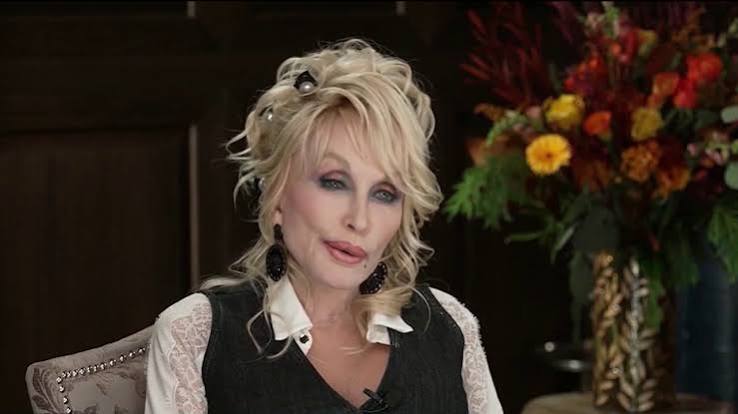 She’s credited her faith, rooted in the Pentecostal church of her childhood, with helping guide her recovery, describing a renewed spiritual connection that carried her out of that stretch.
It was also around this period that she leaned further into the exaggerated, self-aware public image — the wigs, the makeup, what she’s called her “backwoods Barbie” look — deliberately reclaiming a narrative about her appearance that others had been having without her for years.
Four decades later, a strikingly similar pattern emerged.
Her husband, Carl Dean — whom she met on her very first day in Nashville in 1964 outside a laundromat, and married in a small, deliberately modest ceremony in 1966 — became seriously ill in his final years.
Dolly stepped back from much of her schedule to care for him directly, and has since acknowledged that her own health slipped further and further down her list of priorities during that time.
Carl died on March 3, 2025, in Nashville, at 82, closing nearly sixty years of marriage.
In the months that followed, Dolly spoke more openly about loneliness than she reportedly ever had before, dedicating the song “If You Hadn’t Been There” to him and describing their relationship as a love story that hadn’t ended simply because he was gone.
She’s acknowledged struggling to write new music in the aftermath — an unfamiliar experience for someone who had spent sixty years turning grief directly into songs.
Signs of her own declining health became increasingly difficult to attribute to age alone.
In September 2025, she postponed a planned Las Vegas residency at Caesars Palace, citing health challenges without much further detail.
The rescheduled dates, moved to September 2026, were canceled outright that May, with Dolly explaining she was responding well to treatment but not yet strong enough for the physical demands of a full stage show.
Behind the scenes, she was reportedly managing recurring kidney stones and related infections, along with immune and digestive systems she later described as thrown completely out of balance.
In October 2025, her sister Freda’s public request for prayers briefly sparked widespread rumors of a life-threatening illness; Dolly responded with a video confirming she was alive and well, meeting the concern with characteristic humor.
In early August 2026, she missed a Dollywood appearance after experiencing dizziness and dehydration, explaining that her doctor had advised against travel — a directive she met, publicly, with the same self-deprecating tone she’d always used to deflect concern.
On August 21, she gave what would turn out to be her final public health update, telling People magazine she’d been dealing with issues she’d failed to prioritize while caring for Carl — still discussing upcoming projects, still presenting herself as someone in recovery rather than someone near the end.
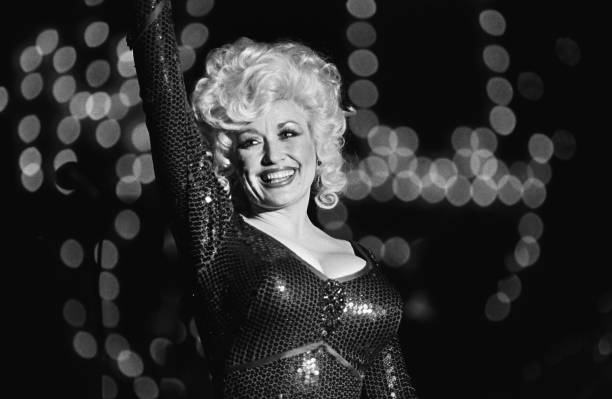 Four days later, on August 25, 2026, Dolly Parton died in Nashville at 80.
Compounding an already difficult stretch, reports indicate Dolly lost an older brother in the summer of 2026 as well, adding another loss to a period already marked by profound grief following Carl’s death — though full independent confirmation of the specific details surrounding that loss remains limited.
What connects both chapters of Dolly Parton’s private suffering — 1982 and 2025 — is the same consistent instinct: absorb the pain quietly, keep working, meet concern with humor rather than vulnerability, and let faith carry what work alone couldn’t fix.
It’s a pattern that shaped nearly sixty years of a career built on turning hardship into something the rest of the world could hold onto, even when she herself was the one who needed holding.
CHER STUNS THE ENTIRE WORLD WITH POWERFUL TRIBUTE TO DOLLY PARTON
 CHER STUNS THE ENTIRE WORLD WITH POWERFUL TRIBUTE TO DOLLY PARTON
When the world lost Dolly Parton in August 2026, the grief was overwhelming. Tributes poured in from presidents, pop stars, and lifelong friends. But it was an unscripted, highly emotional phone call from pop icon Cher to live television that truly stopped the world in its tracks. Stripping away all the Hollywood filters, Cher shared raw, intimate details about a friendship that spanned nearly 50 years, revealing exactly what made the Queen of Country so irreplaceable. Read the full breakdown below and find the complete video analysis at the end of this article.
1. The Call That Stopped the World
The video begins by painting a picture of a grieving world. Following a brief battle with cancer, Dolly passed away just 17 months after losing Carl Dean, her husband of nearly 60 years. While other celebrities released carefully crafted statements, an 80-year-old Cher picked up the phone and called directly into CBS News’ live coverage.
When anchor Gayle King asked Cher if she was surprised by the news (given Dolly had been publicly dealing with health issues), Cher’s voice cracked. She simply replied, “Yeah. Absolutely.” It was a stark, vulnerable admission from a woman who has survived six decades in the brutal entertainment industry. Despite knowing Dolly was struggling, Cher admitted she was entirely unprepared to actually lose her.
2. Dolly’s Singular Gift: Her Spirit and Her Laugh
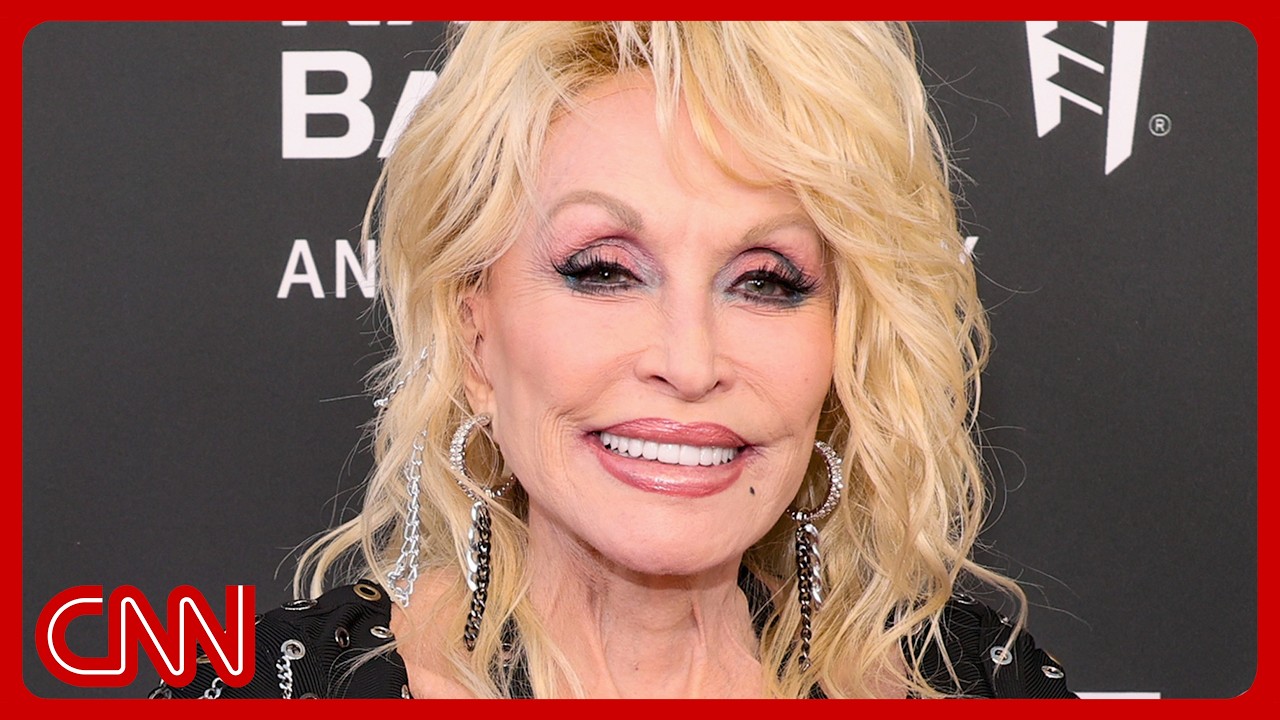 Gayle King pressed further, asking Cher what she would miss most about Dolly. Cher didn’t name her legendary songwriting or her massive philanthropy; she simply said, “Her laugh.” Cher described Dolly’s famous, completely unguarded laugh as a true measure of her spirit.
Cher also revealed what she believed was Dolly’s greatest gift as a performer. It wasn’t her vocal range or pyrotechnics; it was her ability to make eye contact with someone in the back row. Cher described how Dolly would physically bend down from the stage to reach out to the fans closest to her and smile at them as if they were the only reason she came. “You either have that or you don’t,” Cher noted.
3. The Angel in White
Perhaps the most poetic revelation from the interview was the origin of their friendship. They met in 1978 in a manager’s living room. Shortly after, Cher invited Dolly to appear on her ABC variety television special.
In a moment that feels almost impossibly poignant now, Dolly was cast to play an angel dressed in white. Her character’s entire mission in the sketch was to beckon Cher toward the light and save her from going down the wrong path. As Cher recalled the memory live on air, she paused, struck by the profound perfection of the image. “She played an angel,” Cher said, her voice catching. “So, how perfect.”